




At True Digitizing, we transform your creative spark into flawless, high-quality embroidery digitized designs that bring your vision to life.
Our Blogs
We Accept

Copyright 2025 Truedigitizing






At True Digitizing, we transform your creative spark into flawless, high-quality embroidery digitized designs that bring your vision to life.
We Accept
Copyright 2025 Truedigitizing
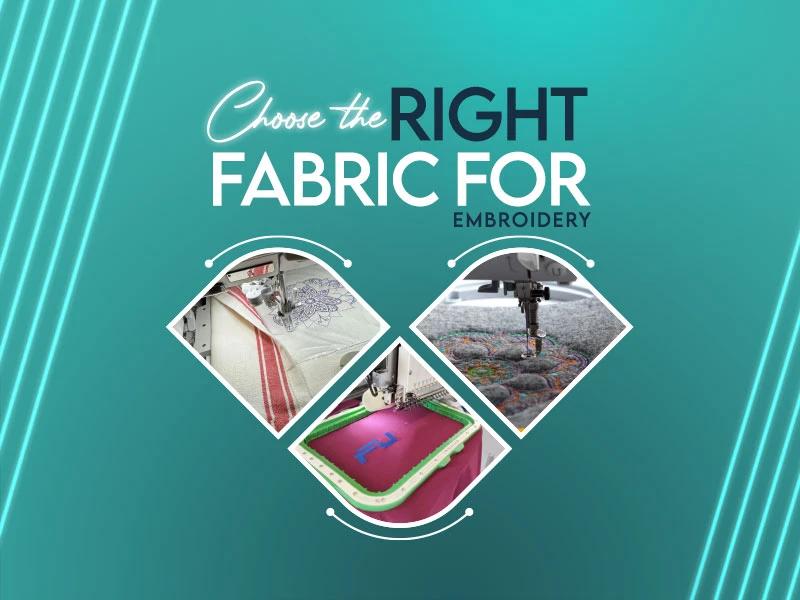


If your embroidery designs look clean on screen but messy on fabric, the problem usually starts with the fabric choice. Many people focus only on thread colors and design size. They ignore the base material. Fabric controls how stitches sit, how the design holds shape, and how long the embroidery lasts.
So what happens when you choose the right fabric for embroidery, you get balanced stitches, design looks sharp & clean, no fabric puckering & the result is so satisfying and mindblowing. Similarly, if you choose the wrong fabric you'll face these challenges like fabric puckering, loose stitches, distortion, thread breaks or so many other issues.
Fabric matters in both hand embroidery and machine embroidery. In embroidery digitizing, fabric plays a big role. Different fabrics need different stitch density, underlay, and pull compensation. Hence, understanding fabric helps you avoid problems before they start.
Let’s go step by step and understand which fabrics work best and why.
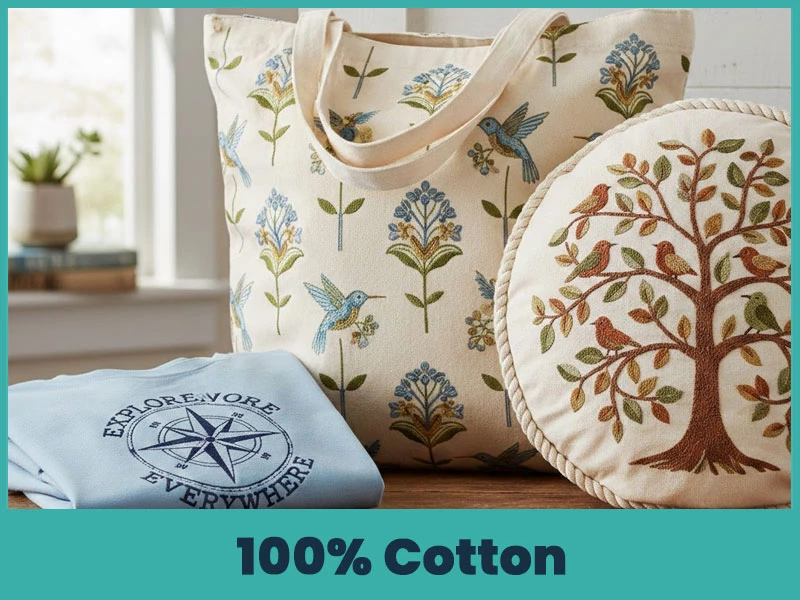
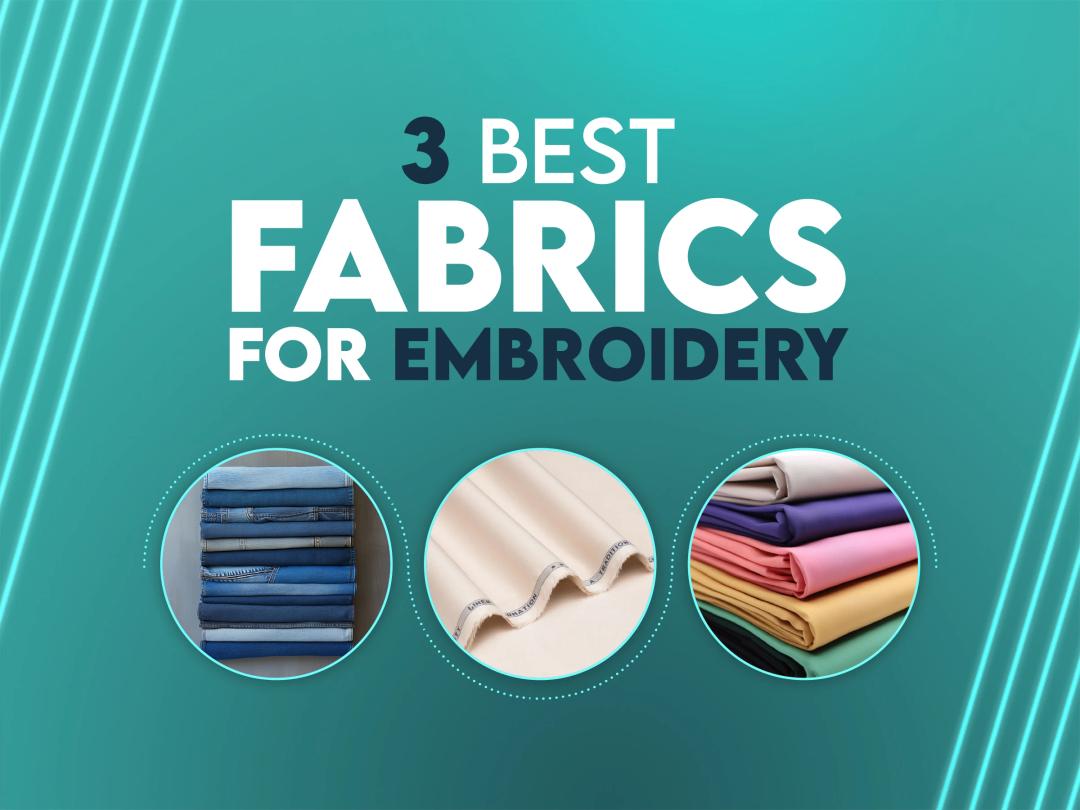
100% Cotton is the most used fabric in embroidery. It has an ideal structure, smooth surface & good strength. Beginners start with cotton because it handles stitches perfectly and doesn't stretch too much.
Cotton is good for:
Home decor items
In machine embroidery, cotton supports balanced stitch density. It does not shift easily during hooping, as long as you use proper stabilizer.
Not all cotton fabrics behave the same.
Look for:
Medium-weight cotton (not too thin, not too thick).
Tightly woven cotton.
Quilting cotton for small detailed designs.
Canvas cotton for stronger items like bags.
Avoid very thin cotton. Thin fabric wrinkles and puckers under dense designs. Always test stitch density if you digitize for cotton garments.
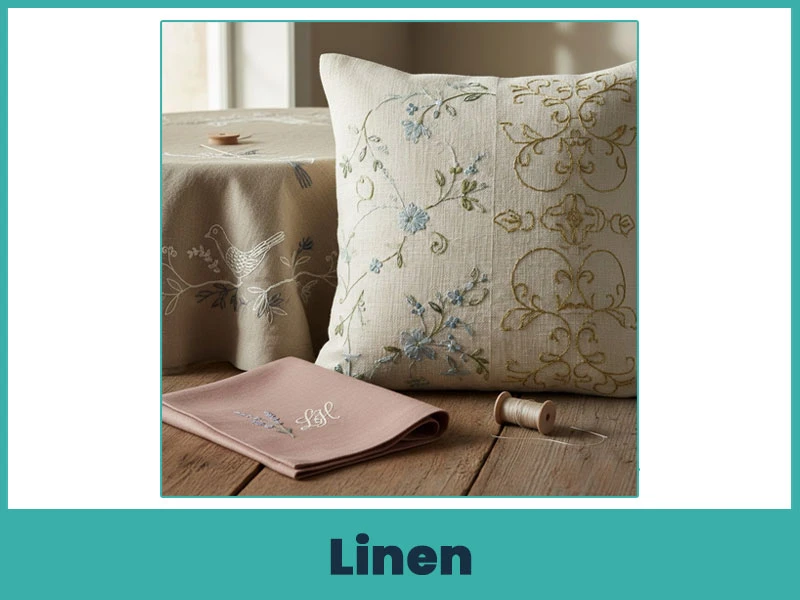
Linen gives you a natural & elegant look. People choose linen for decorative embroidery, tablecloths & wearing garments.
Linen has a visible weave texture. That texture adds character, but it also affects stitch appearance. If the design has very small details, the weave may interfere with clarity.
Linen works best for:
Hand embroidery.
Light decorative machine embroidery.
Home decor.
Linen wrinkles easily. You must press it properly before hooping.
Choose:
Medium weight linen.
Tightly woven linen.
Pre washed linen to reduce shrinkage.
Loose weave linen creates gaps between threads. Dense embroidery may pull those gaps wider. Always use proper stabilizer with linen to control movement.
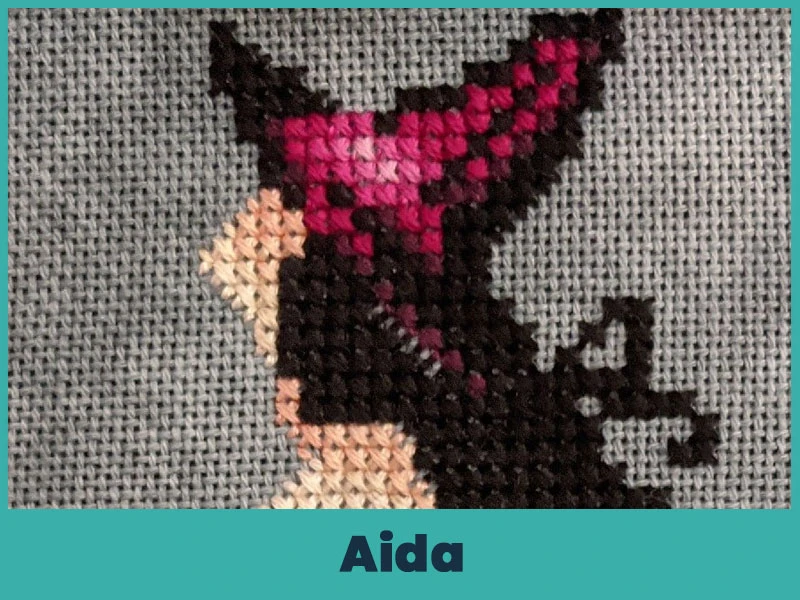
Aida fabric is common in cross-stitch embroidery. It has evenly spaced holes that guide stitch placement.
Beginners prefer Aida because:
The grid makes counting easy.
Stitches stay even.
It holds shape well.
Aida does not suit heavy satin stitches or dense machine embroidery. It works best for counted stitch designs, especially cross stitch patterns.
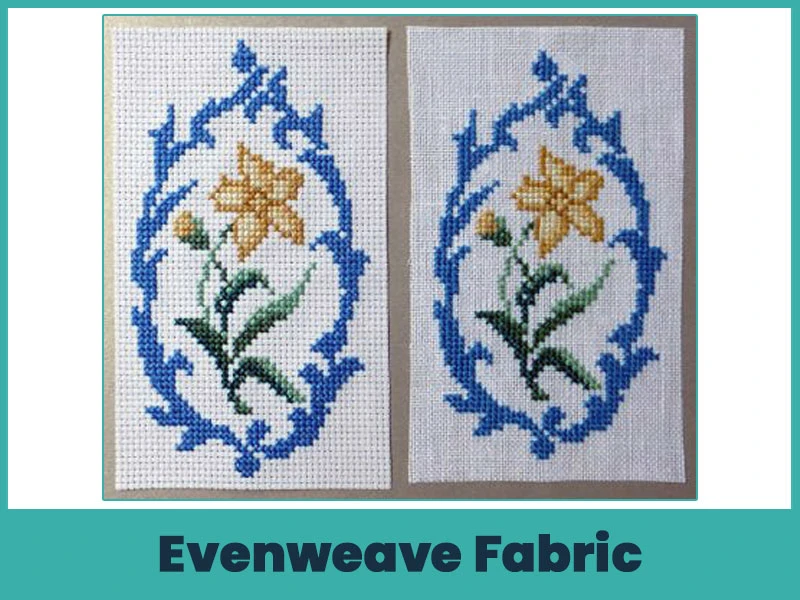
Evenweave fabric looks smoother than Aida. It has evenly spaced threads but without large visible holes.
People choose evenweave for:
Detailed hand embroidery.
Fine decorative designs.
Modern embroidery art.
Evenweave allows more flexibility than Aida. You can stitch over one or two threads depending on the design. In machine embroidery, you need proper stabilization because evenweave can shift slightly.
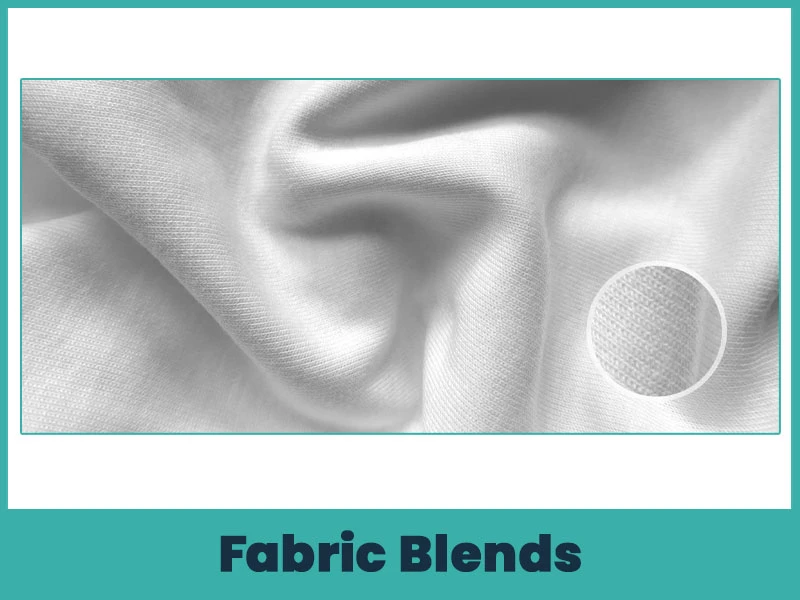
Fabric blends are a combo of cotton & polyester. Many garments use blended fabric because it resists wrinkles and holds color well.
Common blends include:
Cotton polyester.
Linen cotton.
Stretch blends with elastane.
Blended fabrics require careful digitizing. Polyester blends resist shrinking, but stretch blends can distort designs. If the fabric stretches, you must adjust pull compensation and reduce density.
Always check fabric stretch before digitizing a design.
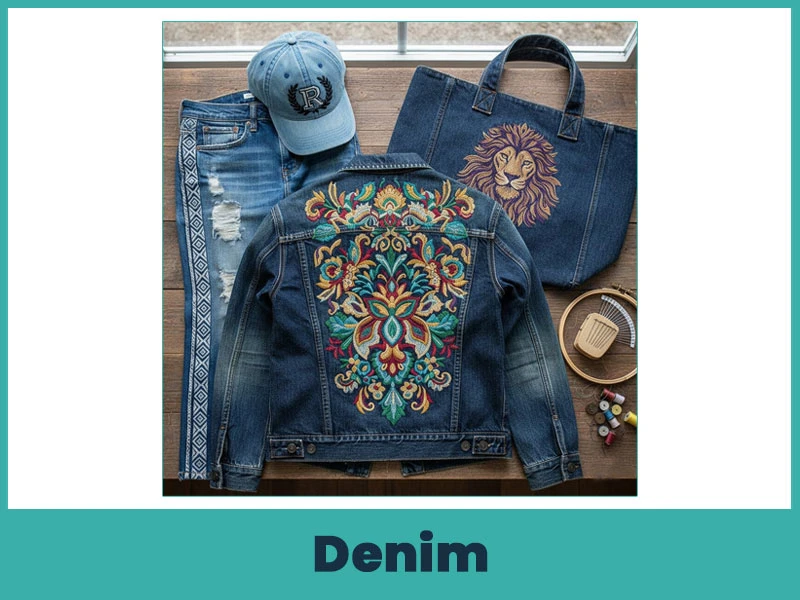
Denim is thick and strong. It handles embroidery very well if you adjust your settings correctly.
Denim works best for:
Jackets.
Jeans.
Caps.
Bags.
Because denim is heavy, it supports dense designs. However, thick seams create uneven hooping areas. Avoid stitching directly over bulky seams.
Use the best needles and proper underlay when digitizing for denim.
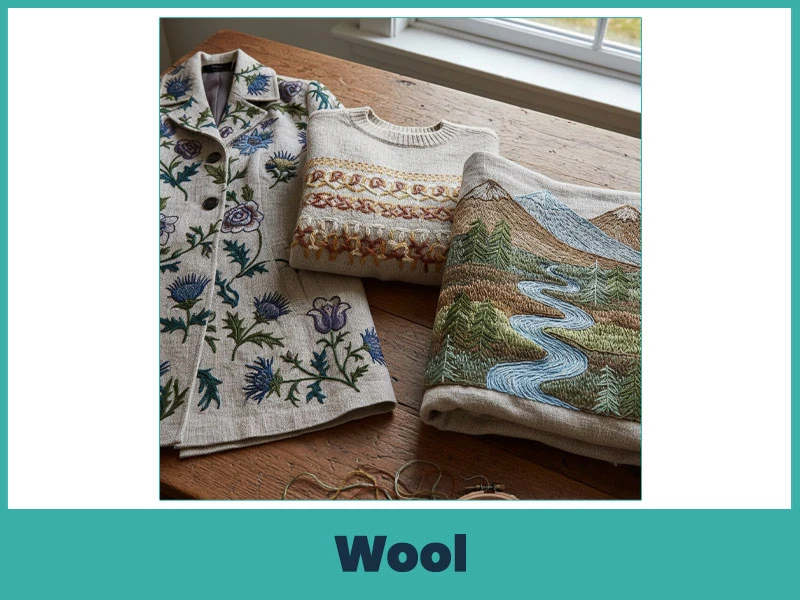
Wool fabric has texture & thickness. It provides warmth and softness but embroidery on wool needs serious attention.
Wool fibers can hide stitches if the pile is high. Hence, digitizing must include strong underlay to lift stitches above the surface.
Wool works for:
Coats.
Sweaters.
Blankets.
Use lighter stitch density to prevent stiffness.
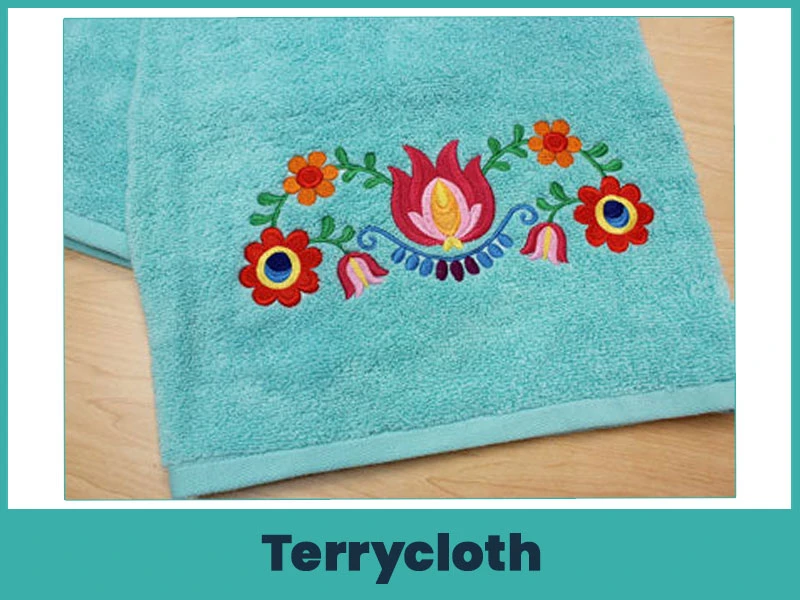
Terrycloth has loops on the surface. You usually see it in towels and bathrobes.
The loops create a challenge. Small details break or vanish into the surface. Satin stitches and bold lettering work better than tiny text.
When digitizing for terrycloth:
Add strong underlay.
Increase stitch length.
Avoid very small details.
Use water-soluble topping to keep stitches from breaking between loops.
Some fabrics need extra care and experience.
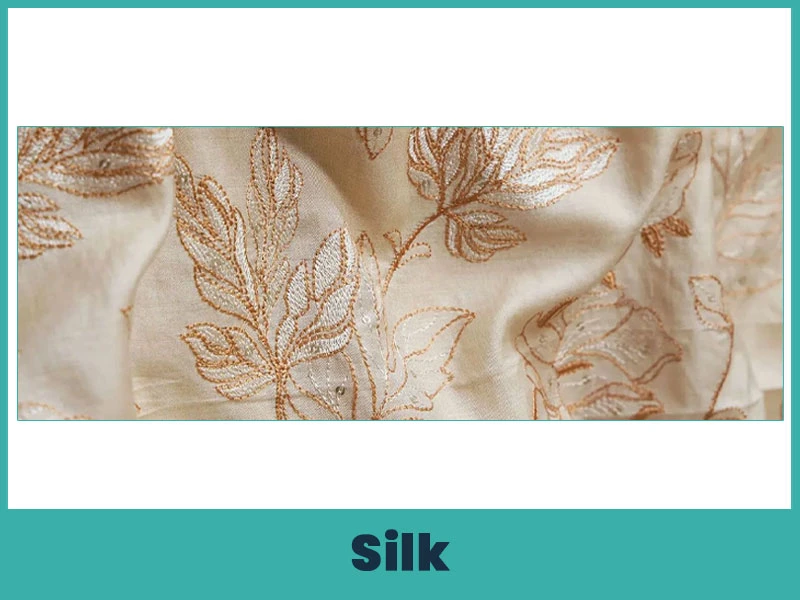
Silk looks smooth and luxurious. It has a soft surface and light weight.
Silk shows needle marks easily. It also shifts during stitching. Use sharp needles and light density.
Silk works best for:
Decorative garments.
Scarves.
Formal clothing.
Always test before production. Silk demands precision in both hooping and digitizing.
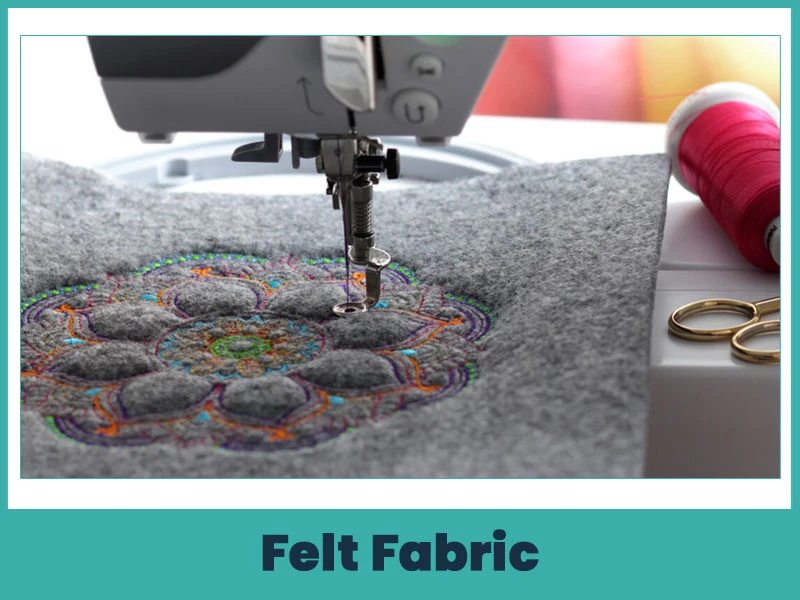
Felt does not fray because it has compressed fibers. It provides a stable base for embroidery.
Felt works well for:
Because felt is thick, it supports satin borders and clean edges. Many custom patch manufacturers prefer felt as a base fabric.
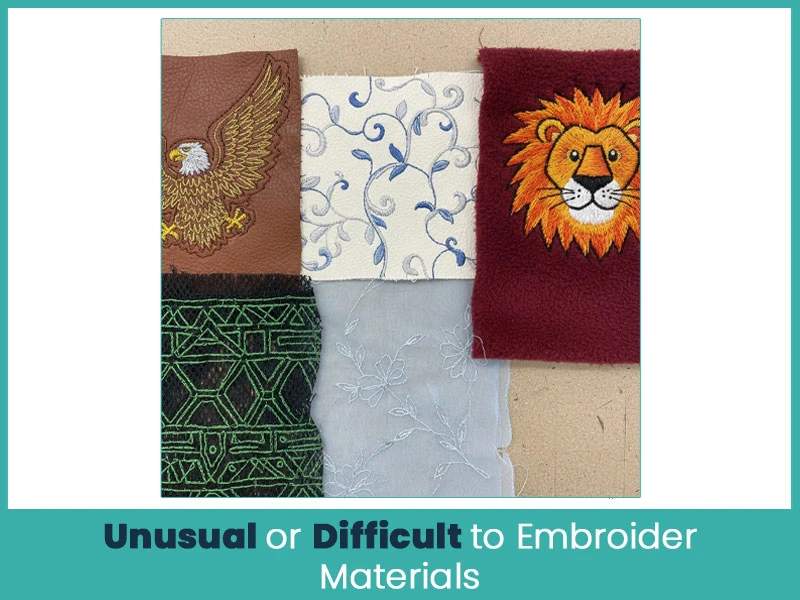
Some materials create serious challenges.
Examples include:
Leather.
Faux leather.
Stretch mesh.
Very thin chiffon.
Heavy fleece.
Leather does not bear mistakes. Needle holes stay visible. Stretch fabrics distort easily. Chiffon tears under dense stitching.
Before you choose these materials, test carefully. Adjust stitch density, reduce speed, and use correct stabilizers.
Fabric choice always connects with digitizing settings. If you ignore that connection, the final result is affected.
When you choose the right fabric for embroidery, you protect your design from distortion, puckering, uneven stitches and many other problems. As we got cotton and linen are good for beginners. Denim and felt support bold designs. Terrycloth and wool need strong underlay. Silk demands careful handling. Difficult fabrics require testing and precise digitizing.
Fabric and digitizing always work together. Good fabric choice improves stitch quality, as well as overall product value.
At True Digitizing, we understand how fabric affects every stitch. We digitize your designs carefully according to the requirements. We balance every detail like stitch densfty, underlay, and pull compensation based on fabric type. We offer a wide range of embroidery digitizing services at reasonable prices. We deliver quality work within the promised time frame.
Nick William has been immersed in the world of embroidery digitizing for over 20 years, earning 25 industry awards throughout his career. As a 3rd generation embroidery expert, Nick’s journey started in his family’s workshop, where he learned the art of digitizing before the rise of modern software. He has worked with leading commercial embroidery businesses and has shared his expertise with over 75,000 home and professional embroiderers. As an author at True Digitizing, Nick is passionate about teaching others how to create beautiful, precise designs through easy-to-follow tutorials and expert advice.
Categories
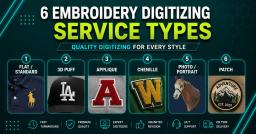
Embroidery Digitizing Services: Which Type Do You Need?
17-08-2026
How to Remove Embroidery From Any Fabric — Step-by-Step Guide 2026
15-07-2026
Is SVG a Vector File? Yes — SVG vs EPS, PNG, PDF Vector Formats you need to know
08-07-2026
Embroidery Trends 2026: What's Hot in Machine & Hand Embroidery | TrueDigitizing
26-06-2026
Top Best Embroidery Digitizing Software in 2026
06-05-2026

Best Multi-Needle Embroidery Machines for Startups (2026)
28-02-2026
DST File: The Complete Guide (What It Is, How to Create, Convert & Use in 2026)
28-02-2026
Janome 550E vs Baby Lock Flare | Best Mid-Range Embroidery Machine?
26-02-2026
Advanced Techniques in Embroidery Digitizing
19-02-2026

Most Common Types of Threads to Use in Machine Embroidery
12-02-2026
Asked Questions