




At True Digitizing, we transform your creative spark into flawless, high-quality embroidery digitized designs that bring your vision to life.
Our Blogs
We Accept

Copyright 2025 Truedigitizing






At True Digitizing, we transform your creative spark into flawless, high-quality embroidery digitized designs that bring your vision to life.
We Accept
Copyright 2025 Truedigitizing
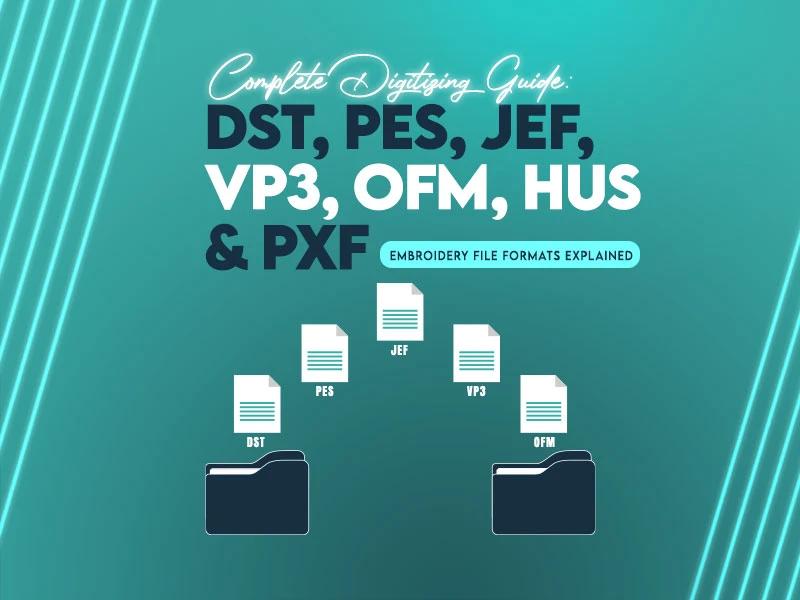


Embroidery machines don’t work on vector images. They read stitches, layers, needle points, thread paths, jump commands, trim points, and tension notes. This is why embroidery file formats matter. When a digitized design is saved in the wrong format, the machine skips stitches, breaks threads or ignores color changes. The right file format keeps the design clean, sharp and aligned from the first stitch to the last.
This guide explains the best embroidery file formats in a clear way so you know exactly which one to use for each machine and project. Let's understand this guide.
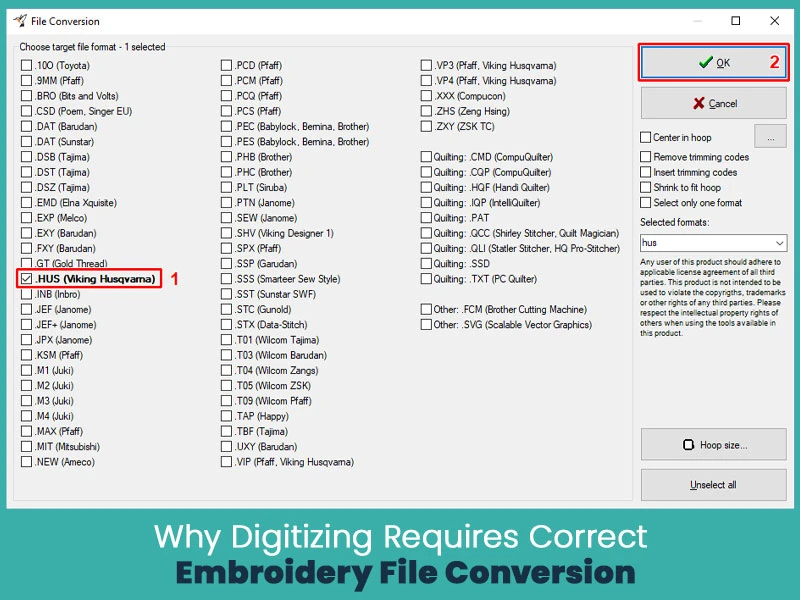
Digitizing is not just tracing an image into stitches. It is a process where a design is mapped for a specific machine’s language. Every format has its own way of carrying color information, machine codes, stitch density, and thread jumps. If the file is not in the correct format for your machine, you may see misaligned outlines, missing letters, closed small details, thread nesting, or distorted fill areas. Choosing the right format ensures your machine reads the design without confusion.
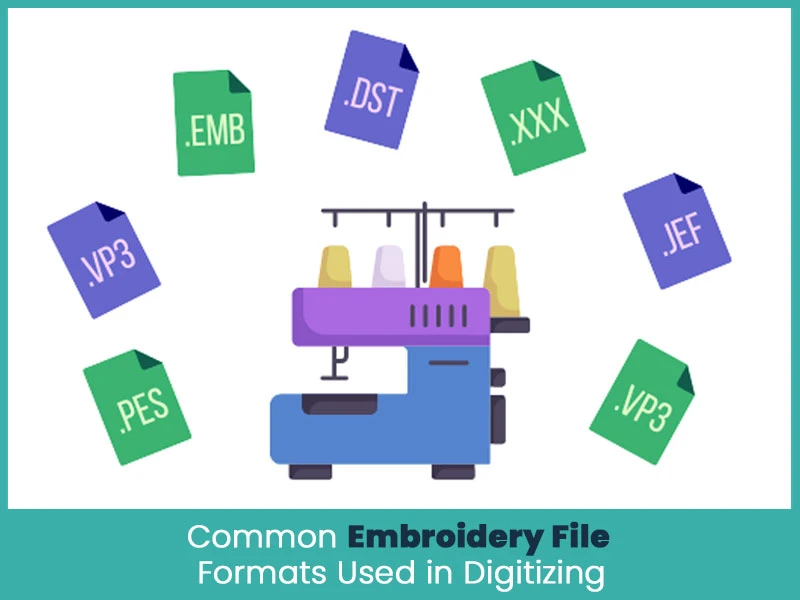
The embroidery industry uses several file types depending on the machine brand. The most used formats are DST, PES, JEF, VP3, OFM, HUS, and PXF. Some formats are universal, while others are limited to their own brand. DST is one of the most common formats but it does not carry color information, while formats like PES, VP3, and HUS carry full color layers for better control.
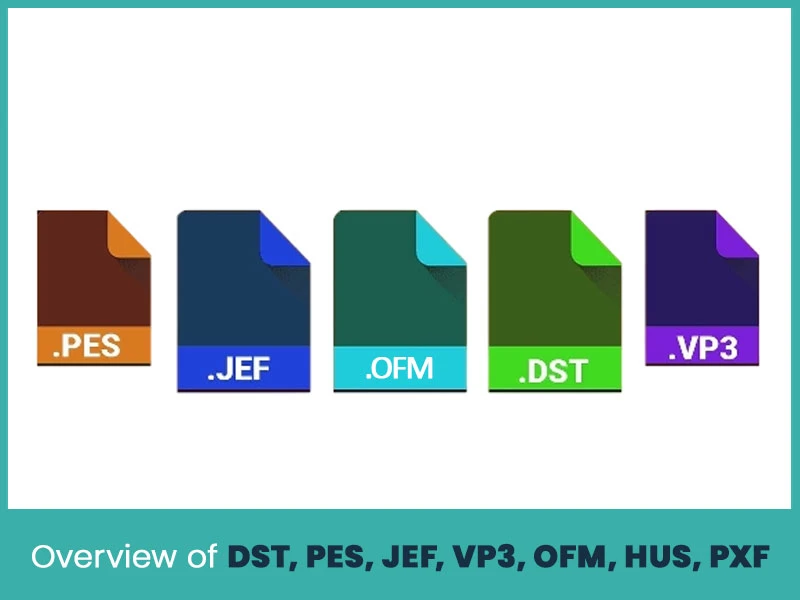
Every embroidery file format is made for a certain machine and saves stitch details in its own way.
DST is used by Tajima and other commercial machines. It handles stitches well but has limited color data, so it is mostly used in bulk work.
PES is made for Brother and Babylock. It supports full colors and works for home use and small commercial projects.
JEF is for Janome machines. It gives clear color reading and is mainly used for simple home embroidery.
VP3 works with Viking and Pfaff machines. It keeps layered colors clear and stable, which helps in designs with many thread steps.
OFM is for Melco machines. It saves full stitch commands, trims, and jumps, which helps in detailed digitizing.
HUS is used with Husqvarna Viking. It reads colors accurately and works well for neat home stitching.
PXF is linked to Tajima Pulse. It stores full design commands like trims, jumps, and needle changes. This format is used in professional digitizing where full control is needed. Each format serves best when used with the right machine and design needs.
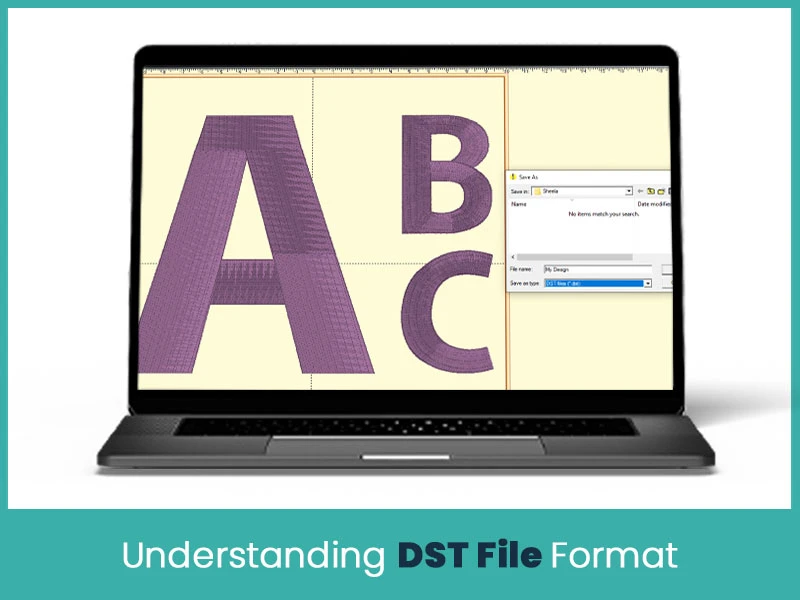
DST is one of the oldest and most used formats. It is a universal format for commercial embroidery. It reads fast on multi-head machines.
Best use cases & limitations
- Best for mass production, hats, patches, and jackets.
- Carries stitch data but does not store thread colors.
Limited editing ability
- When to choose DST format
- Use DST when you run bulk designs on industrial machines. It ensures smooth needle movement and clean output.
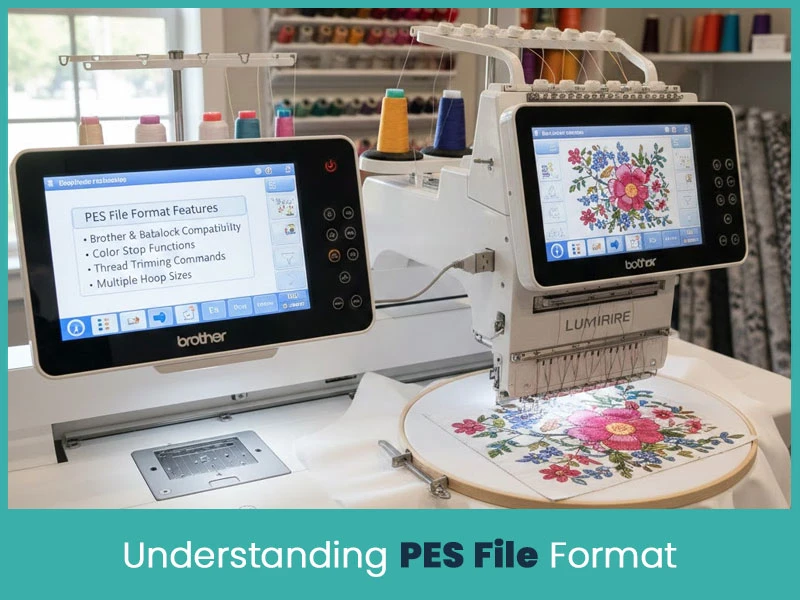
PES is designed for Brother and Babylock machines. It is known for clean color interpretation.
Features of PES
- Easy to edit.
- Carries full color layers.
- Works well for lettering and small details.
Brother & Babylock compatibility
- PES is the default option for these brands, which makes conversion simple.
Color data support
PES stores thread charts and color stops clearly.
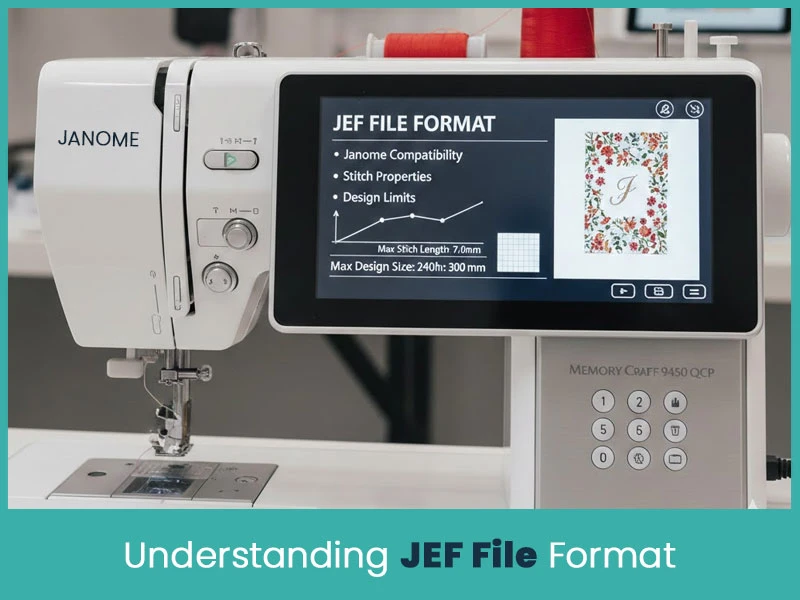
JEF is developed for Janome machines.
Janome compatibility
- It reads best in Janome’s embroidery units without any patches or conversion errors.
Stitch properties & design limits
- Good color reading but limited in complex layers.
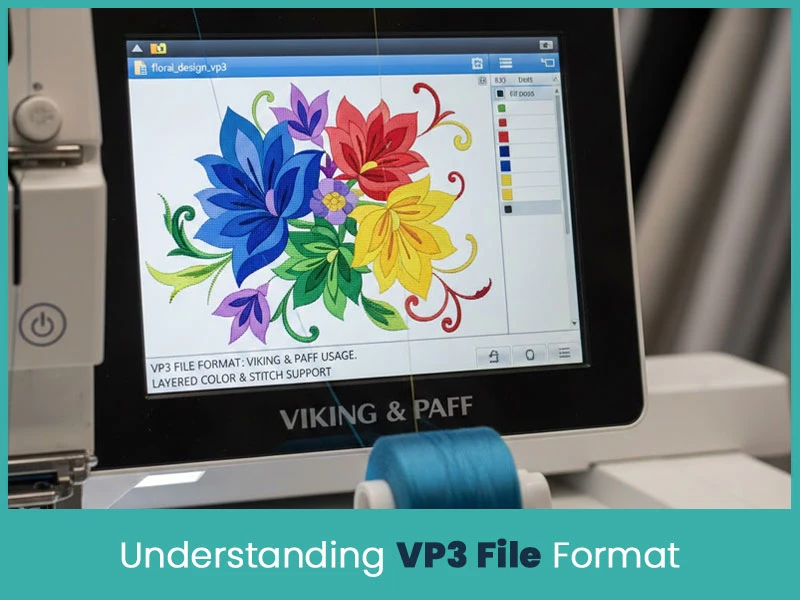
VP3 is preferred by Viking and Pfaff machines.
Viking & Pfaff usage
- Strong native support, smooth needle path, and better layer control for multi-step stitching.
Layered color & stitch support
- Reads color steps clearly and keeps layers accurate.
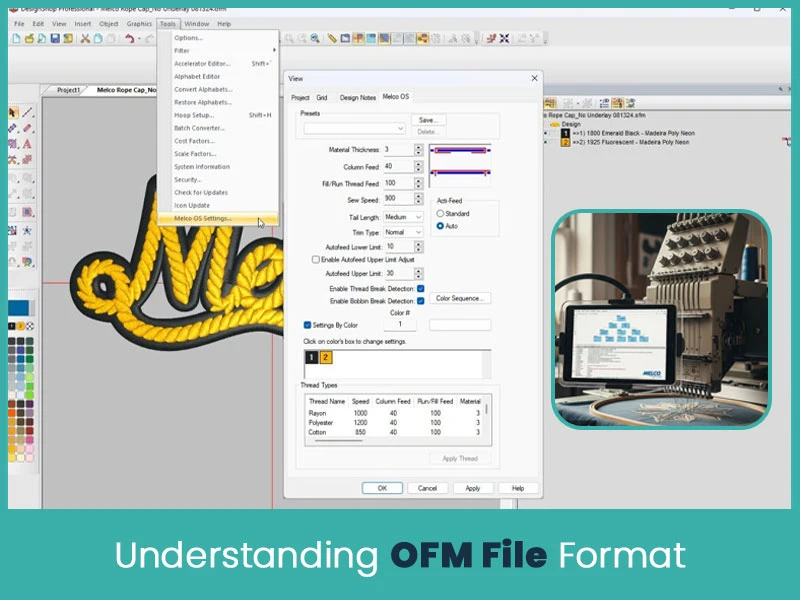
OFM is mainly for Melco machines.
Melco compatibility
- Ideal for precise control in Melco software.
Machine-readable stitch instructions
- Provides detailed reading of trim commands, jump points, thread breaks, and needle changes.
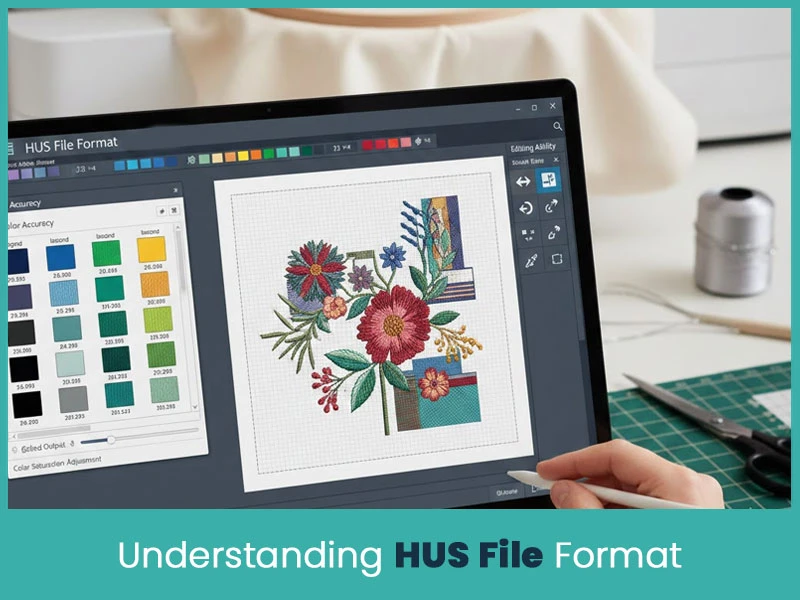
- HUS works best with Husqvarna Viking.
Husqvarna Viking usage
- Runs smoothly without conversion loss.
Color accuracy & editing ability
- Keeps color mapping accurate and allows easy editing.
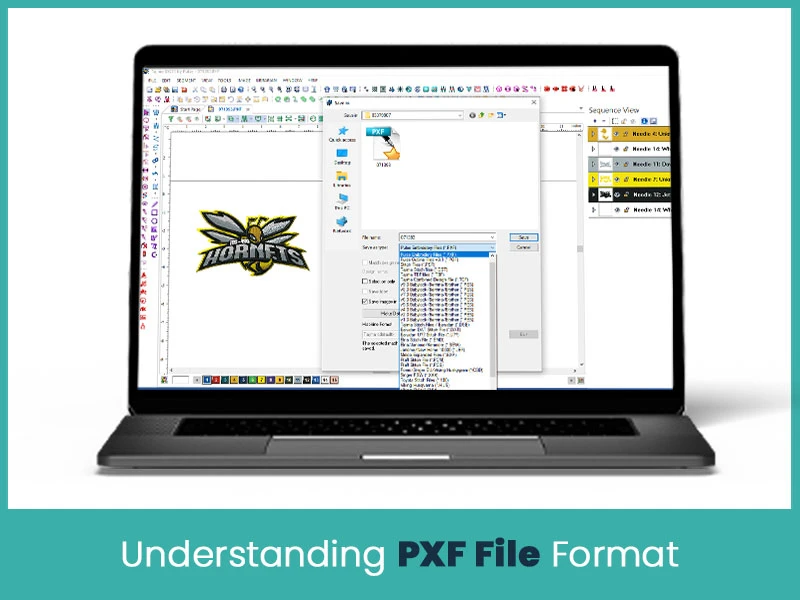
PXF is designed for Tajima Pulse software.
Tajima Pulse compatibility
- Great for commercial digitizers working with advanced stitch structures.
Advanced digitizing, trims, jumps, needle data
- PXF stores full command details, making it reliable for complex designs and multi-needle machines.
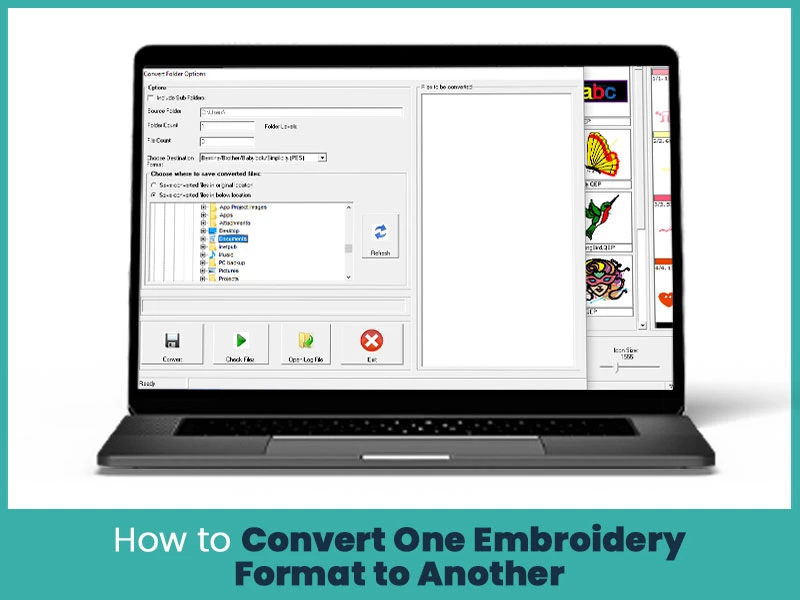
Conversion should be done carefully. Each format reads commands differently. When converting:
- Keep stitch density balanced.
- Avoid resizing more than 10%.
- Recheck trims and jumps.
- Test run on the intended machine.
Most software tools allow direct export but checking color charts after conversion is important.
A design may look simple on the screen but stitch differently on fabric. Professional digitizing ensures that:
- Outlines stay clean.
- Fills remain even.
- Trims do not cut early.
- Small lettering does not close or break.
If you want accurate files in multiple formats, True Digitizing offers clean digitizing with support for DST, PES, JEF, VP3, OFM, HUS, PXF and more. We create files based on your requirements and needs. So visit our website and place an order now.
Understanding embroidery file formats helps prevent production delays and machine-read errors. Each format has its place based on the machine and design requirements. If you need files prepared in the right format with clean results, True Digitizing provides reliable digitizing services for every embroidery machine format. You can send your design and request the exact format needed.
Nick William has been immersed in the world of embroidery digitizing for over 20 years, earning 25 industry awards throughout his career. As a 3rd generation embroidery expert, Nick’s journey started in his family’s workshop, where he learned the art of digitizing before the rise of modern software. He has worked with leading commercial embroidery businesses and has shared his expertise with over 75,000 home and professional embroiderers. As an author at True Digitizing, Nick is passionate about teaching others how to create beautiful, precise designs through easy-to-follow tutorials and expert advice.
Categories
Embroidery Digitizing Services: Which Type Do You Need?
17-08-2026
How to Remove Embroidery From Any Fabric — Step-by-Step Guide 2026
15-07-2026
Is SVG a Vector File? Yes — SVG vs EPS, PNG, PDF Vector Formats you need to know
08-07-2026
Embroidery Trends 2026: What's Hot in Machine & Hand Embroidery | TrueDigitizing
26-06-2026
Top Best Embroidery Digitizing Software in 2026
06-05-2026
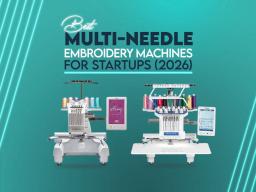
Best Multi-Needle Embroidery Machines for Startups 2026
28-02-2026
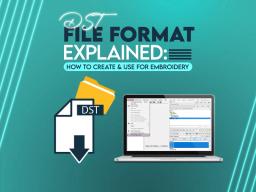
DST File: The Complete Guide (What It Is, How to Create, Convert & Use in 2026)
28-02-2026
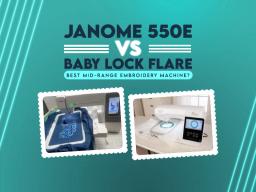
Janome 550E vs Baby Lock Flare | Best Mid-Range Embroidery Machine?
26-02-2026
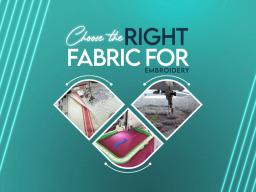
Choose the Right Fabric for Embroidery
20-02-2026
Advanced Techniques in Embroidery Digitizing
19-02-2026
Asked Questions