





Most Common Types of Threads to Use in Machine Embroidery
A perfect embroidery design starts with the right thread, this is the most important step. Usually people set tension, speed & overall digitizing settings, but they ignore thread choice. Thread gives you shine, strength, texture, and perfect stitching. Everything gets messed up when you pick the wrong thread, it makes a design look rough, uneven or messy.
Embroidery game depends on understanding the most common types of threads to use in machine embroidery. Each thread behaves differently on fabric. Some create shine. Some add strength. Some give a soft and natural finish.
You'll see 7 common embroidery thread types in this guide, understand their best uses & some key points you must know before stitching.
Here are the 7 Types of Embroidery Threads and Their Best Uses
1. Rayon Thread for Machine Embroidery
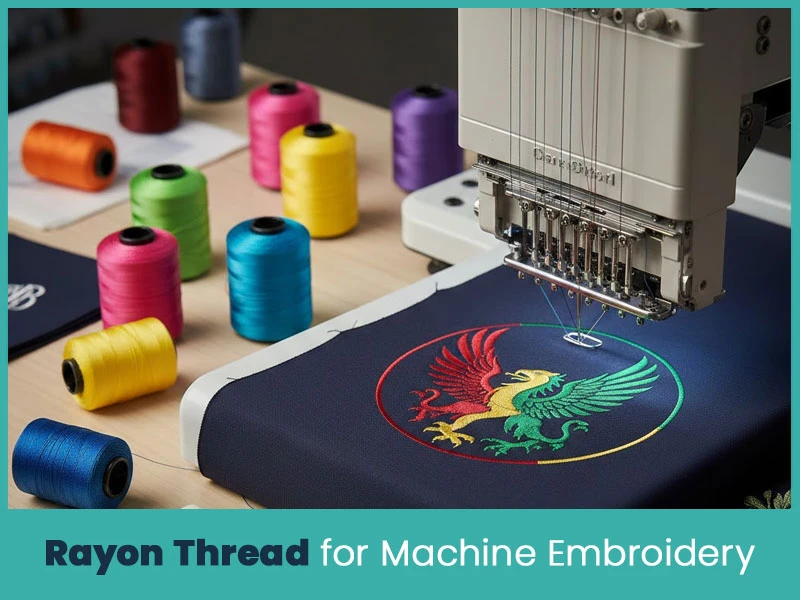
Rayon thread remains one of the most widely used embroidery threads. It creates a smooth surface and strong shine. Many embroiderers choose rayon for decorative and logo work because it delivers bright color and clean detail.
Rayon flows smoothly through most embroidery machines. It produces sharp edges and neat fills. The surface reflects light, which makes designs stand out on garments.
Best Uses
Logo embroidery.
Decorative designs.
Fashion garments.
Monograms.
Left chest embroidery.
Rayon works best when shine and visual appeal matter most.
Key Considerations
Rayon thread does not match polyester in strength. Tight tension can cause breakage. Direct sunlight can fade the color over time.
2. Polyester Thread
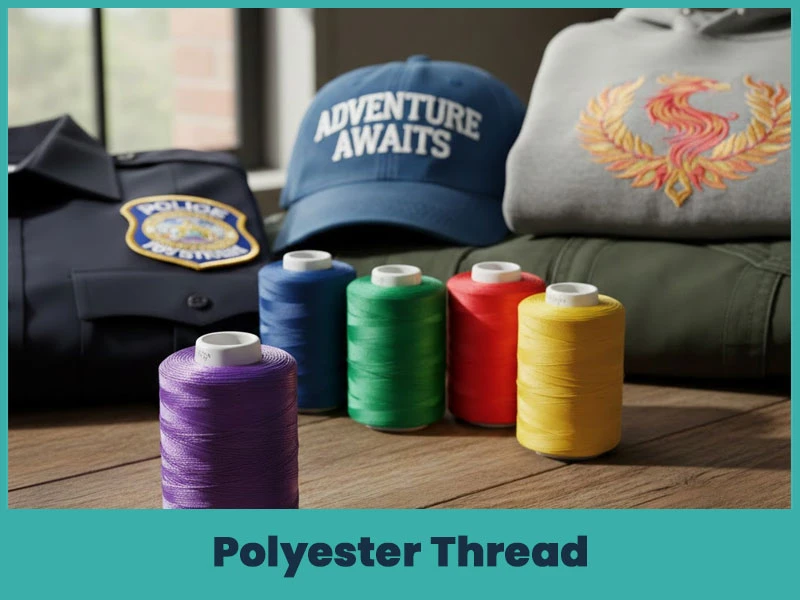
Polyester thread gives strength and durability. 50% to 60% commercial embroidery businesses use polyester threads because it handles daily wear, washing, heat, and sunlight without losing color.
Polyester creates a clean finish with moderate shine. It performs well at high machine speeds and prevents thread breaks during production.
Best Uses
Uniforms.
Sportswear.
Workwear.
Outdoor apparel.
Caps and hats.
Polyester thread works best for those garments that face regular washing and outdoor conditions.
Key Considerations
Polyester resists fading & shrinking. It does not change color after many washes.
Bulk embroidery & commercial projects benefit from polyester because it combines durability with consistent stitching performance.
3. Cotton Thread for Machine Embroidery
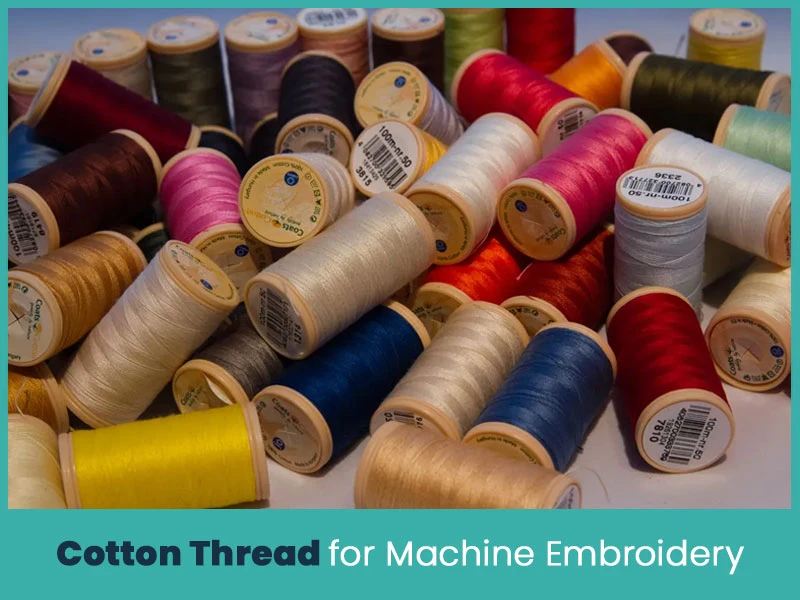
Cotton thread creates a matte and natural finish. It does not reflect light like rayon or polyester. It gives embroidery a soft and classic appearance.
Cotton mixes perfectly with fabrics. It sits flat on the surface and produces a clean, non glossy look. Usually Quilters & traditional embroidery makers select cotton because it matches heritage and rustic styles.
Cotton thread creates smooth coverage on large stitch areas. It supports vintage patterns and soft decorative work.
Best Uses
Quilting.
Baby clothing.
Heritage designs.
Rustic or handmade style embroidery.
Cotton works best when you want a soft and natural appearance.
Key Considerations
Cotton thread creates more lint than synthetic threads. Regular machine cleaning prevents buildup inside the tension area and bobbin case.
Cotton doesn't stretch much. Right tension settings keep stitches balanced & prevent puckering even after washing.
4. Metallic Thread for Machine Embroidery
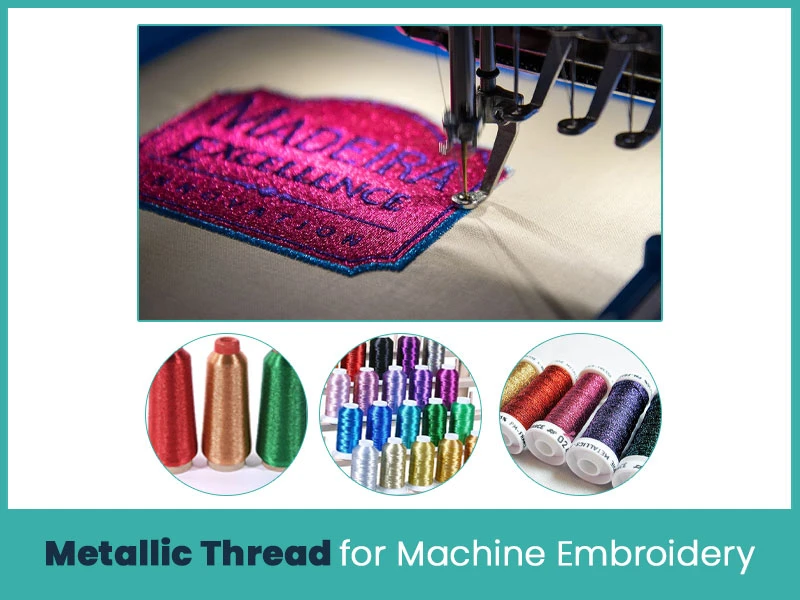
Metallic thread adds strong shine and reflective detail. It contains a metallic layer wrapped around a core thread. This structure creates sparkle and brightness in stitched designs.
Metallic thread highlights designs even small stitched areas catch light and grab attention.
Designers use metallic thread for special garments where visual impact matters.
Best Uses
Wedding garments.
Festive outfits.
Logos with highlights.
Decorative borders.
Special occasion embroidery.
Metallic thread works best when you want shine and decorative effect.
Key Considerations
Metallic thread breaks more easily than standard threads. Lower stitching speed reduces friction and prevents breakage.
A larger embroidery needle improves thread flow. Proper tension adjustment keeps stitching smooth and stable.
5. Silk Thread for Machine Embroidery
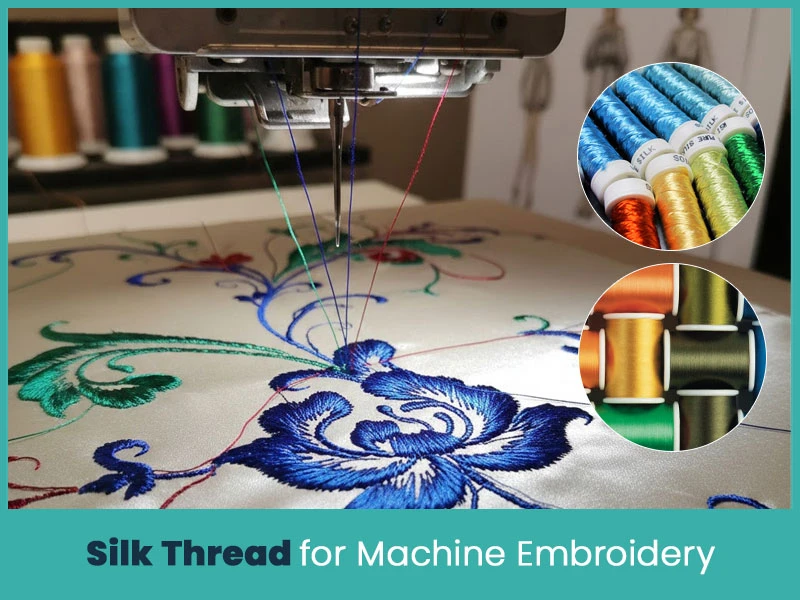
Silk thread creates a rich & smooth finish. It absorbs dye deeply, which gives you a strong and vibrant color. Silk gives embroidery a refined and elegant appearance.
Silk thread glides through fabric easily and forms precise stitches. It supports fine detailing and high end garment decoration.
Luxury embroidery projects often use silk because it enhances fabric without overpowering it.
Best Uses
Luxury garments.
Fine detailing.
High-end embroidery.
Traditional clothing.
Silk supports premium embroidery work.
Key Considerations
Silk threads are costly than other threads. Careful storage protects it from moisture and dust.
Frequent washing reduces its smooth texture over time. Silk performs best on garments that receive gentle care.
6. Wool Thread
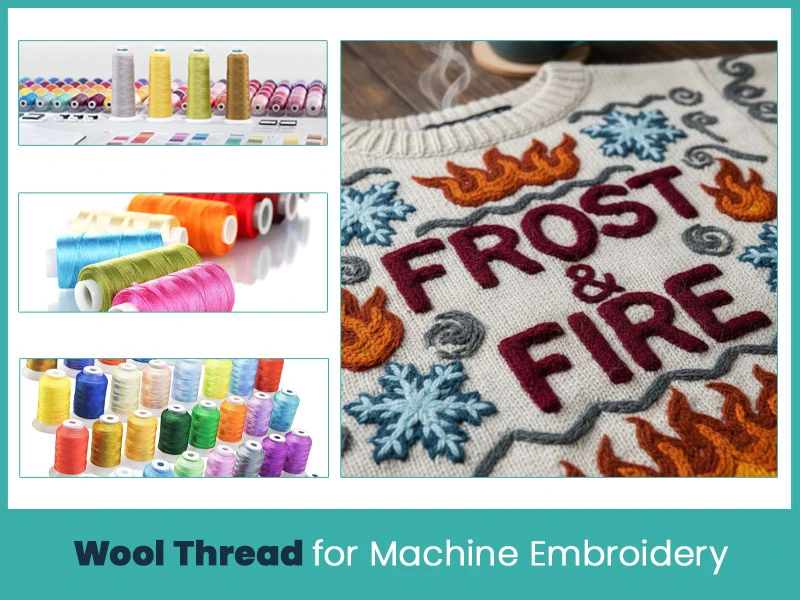
Wool thread creates thickness and texture. It produces raised stitching and adds visible depth to embroidery.
Wool does not create shine. Instead, it delivers warmth and bold presence. Larger letters and simple shapes benefit from wool’s volume.
Decorative and seasonal garments often use wool thread for textured effects.
Best Uses
Decorative embroidery.
Winter garments.
Bold lettering.
Craft projects.
Wool works best when texture matters more than shine.
Key Considerations
Wool thread runs thicker than standard embroidery thread. Fine and detailed designs lose clarity when stitched with wool.
A larger needle and slower stitching speed improve results and maintain stitch control.
7. Variegated Thread for Machine Embroidery
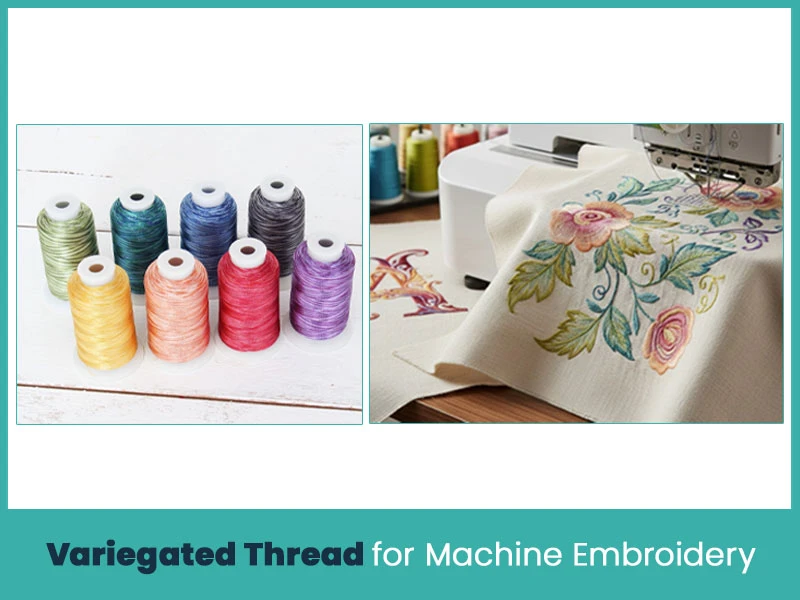
Variegated thread contains multiple colors on one spool. As the machine stitches, the color shifts automatically along the design.
This thread creates natural gradients and multi-tone effects without manual thread changes. Floral and artistic designs gain depth and movement with variegated stitching.
Variegated thread simplifies creative embroidery while maintaining visual interest.
Best Uses
Floral designs.
Artistic patterns.
Creative lettering.
Decorative fills.
Variegated thread adds color variation and dimension.
Key Considerations
Color transitions do not follow exact brand shades. Testing on sample fabric helps control final appearance.
Stitch length and density affect how color changes appear in the design.
What Weight Should Machine Embroidery Thread Be?
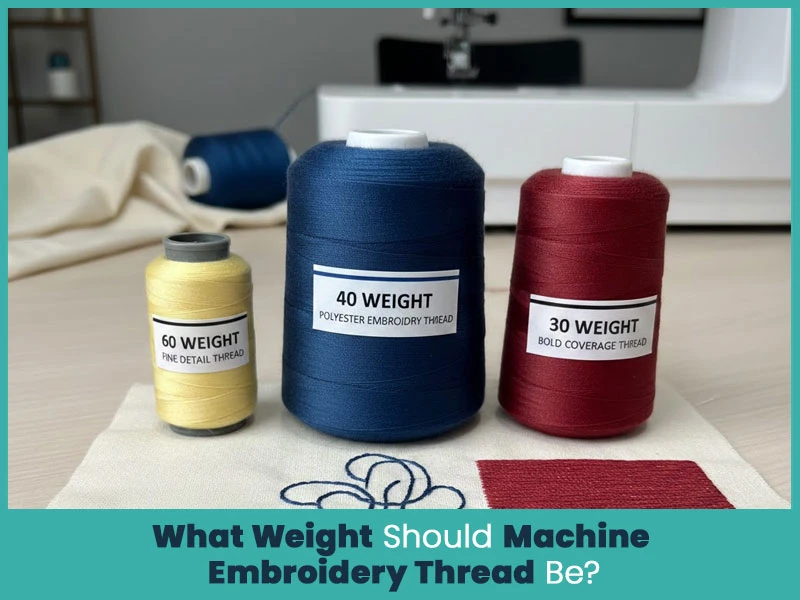
Thread weight controls stitch thickness and coverage. Most machine embroidery uses 40-weight thread.
40-weight thread balances coverage and detail. It creates smooth fills, readable lettering, and stable stitching. Commercial embroidery businesses rely on 40-weight because machines handle it efficiently.
Other common weights include:
60-weight thread – thinner, supports fine details and small text.
30-weight thread – thicker, supports bold fills and strong coverage.
Small lettering benefits from thinner thread. Large, solid areas benefit from thicker thread. For most embroidery projects, 40-weight delivers the most consistent result.
What is the Most Common Type of Thread Used in Embroidery?
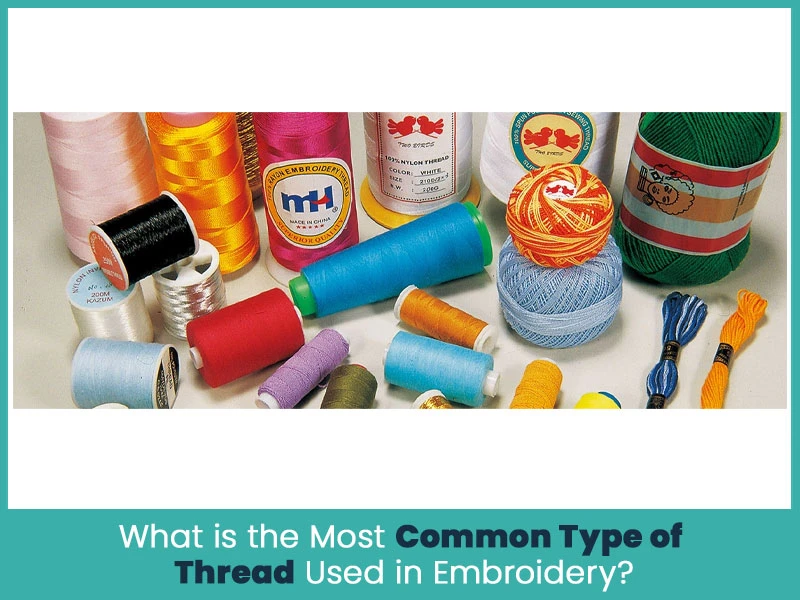
Polyester thread ranks as the most common thread used in machine embroidery.
Embroidery businesses choose polyester because it withstands washing, sunlight, and daily wear. It maintains color and strength under high-speed stitching.
Polyester reduces breakage and supports consistent production output. Commercial shops depend on it for uniforms, workwear, and branded apparel.
Rayon offers shine, but polyester leads in durability and long-term performance.
Conclusion
Thread choice defines embroidery quality. Machines and digitizing matter, but thread determines the final surface, strength, and appearance.
Rayon gives shine.
Polyester gives durability.
Cotton gives a natural finish.
Silk gives elegance.
Wool gives texture.
Metallic gives sparkle.
Variegated gives color variation.
Match thread type with fabric & design purpose to improve results.
If you are looking for embroidery digitized designs that match your thread type and fabric material, don't forget to True Digitizing, we deliver affordable embroidery digitizing services with fast turnaround times. Our team prepares clean, production-ready stitch files that run smoothly without thread breaks.
Place an order now & get embroidery digitized files that perform correctly from the first attempt.
Author
Nick William
Embroidery Digitizer
Nick William has been immersed in the world of embroidery digitizing for over 20 years, earning 25 industry awards throughout his career. As a 3rd generation embroidery expert, Nick’s journey started in his family’s workshop, where he learned the art of digitizing before the rise of modern software. He has worked with leading commercial embroidery businesses and has shared his expertise with over 75,000 home and professional embroiderers. As an author at True Digitizing, Nick is passionate about teaching others how to create beautiful, precise designs through easy-to-follow tutorials and expert advice.
Categories


Embroidery Digitizing Services: Which Type Do You Need?
17-08-2026
How to Remove Embroidery From Any Fabric — Step-by-Step Guide 2026
15-07-2026

Is SVG a Vector File? Yes — SVG vs EPS, PNG, PDF Vector Formats you need to know
08-07-2026
Embroidery Trends 2026: What's Hot in Machine & Hand Embroidery | TrueDigitizing
26-06-2026
Top Best Embroidery Digitizing Software in 2026
06-05-2026
Best Multi-Needle Embroidery Machines for Startups 2026
28-02-2026
DST File: The Complete Guide (What It Is, How to Create, Convert & Use in 2026)
28-02-2026
Janome 550E vs Baby Lock Flare | Best Mid-Range Embroidery Machine?
26-02-2026
Choose the Right Fabric for Embroidery
20-02-2026
Advanced Techniques in Embroidery Digitizing
19-02-2026
Frequently
Asked Questions






At True Digitizing, we transform your creative spark into flawless, high-quality embroidery digitized designs that bring your vision to life.
Our Blogs
We Accept

Copyright 2025 Truedigitizing