




At True Digitizing, we transform your creative spark into flawless, high-quality embroidery digitized designs that bring your vision to life.
We Accept

Copyright 2025 Truedigitizing






At True Digitizing, we transform your creative spark into flawless, high-quality embroidery digitized designs that bring your vision to life.
We Accept
Copyright 2025 Truedigitizing
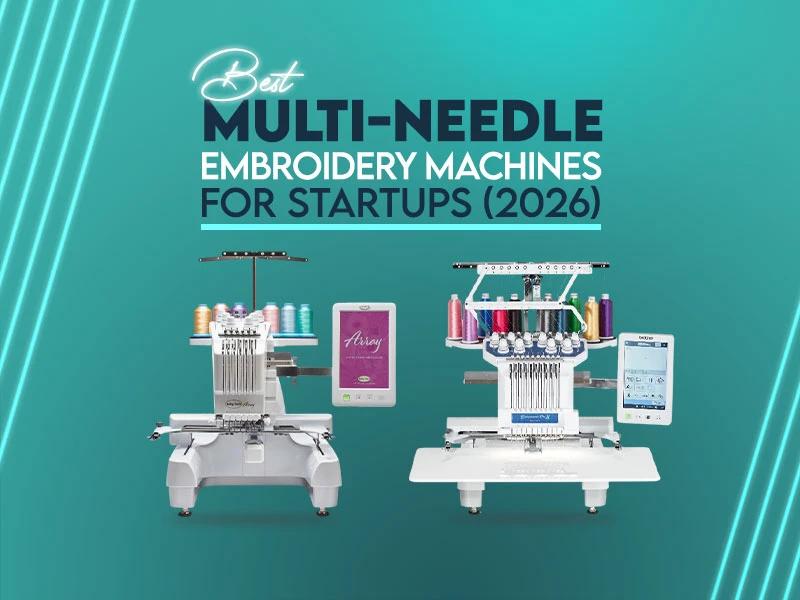


It's so exciting when you start your own business (embroidery business). You get first bulk orders, your first repeat customer, and now your brand name stitched on hats, jackets, shirts, bag and more. But the main question is which machine should you invest in?
If you are unaware and choose the wrong one, you'll face some serious problems like production, poor results & many more. So invest wisely.
In this guide, we will talk about the best multi-needle embroidery machines for startups (2026). These machines are trusted in the embroidery industry and are used by home businesses as well as small commercial shops. Everything explained here is practical, clear, and based on real machine performance, not marketing promises.
Let’s get started.
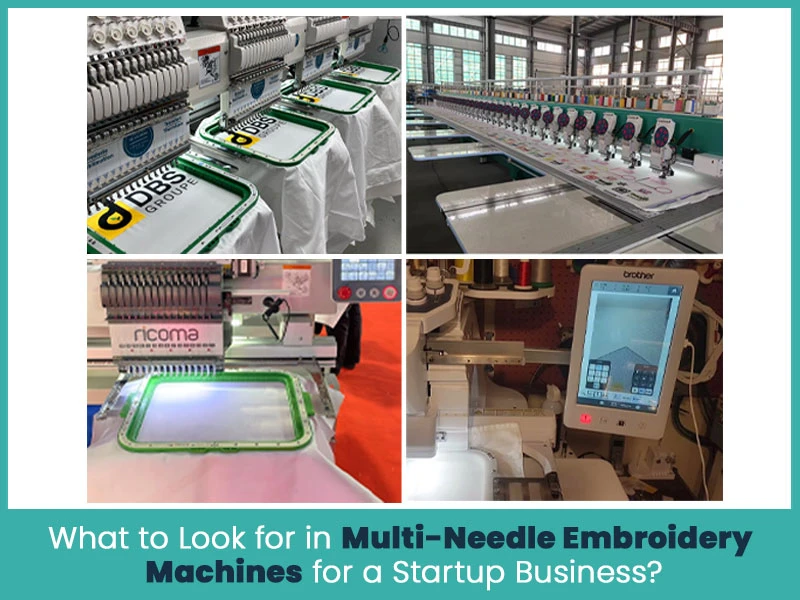
Before investing thousands of dollars, you need to understand what matters most.
Here are the key things every startup should consider:
More needles mean fewer thread changes. A 6-needle machine is good for beginners. A 10 or 16-needle machine works better for bulk production.
Most commercial machines run between 800 to 1200 stitches per minute (SPM). Higher speed helps complete bulk orders faster but stability is also very important.
If you plan to stitch jacket backs or large logos, you need a bigger embroidery field. Smaller fields limit your order types.
Touchscreen control panels, automatic thread trimming, and needle threading save time and reduce mistakes.
Good technical support matters. As long as your machine is covered under warranty, you feel secure.
Startup owners must balance cost and growth. Do not overbuy, but also do not underinvest.
Now let’s review the best machines available.
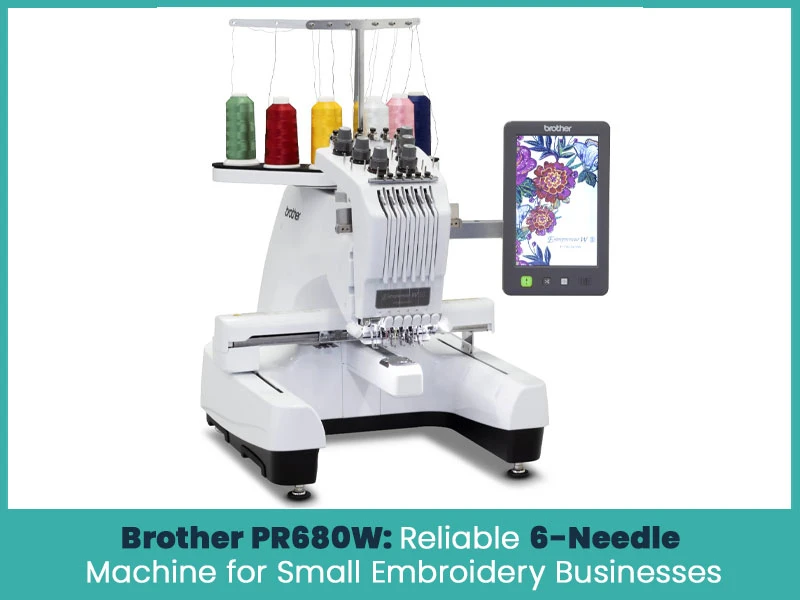
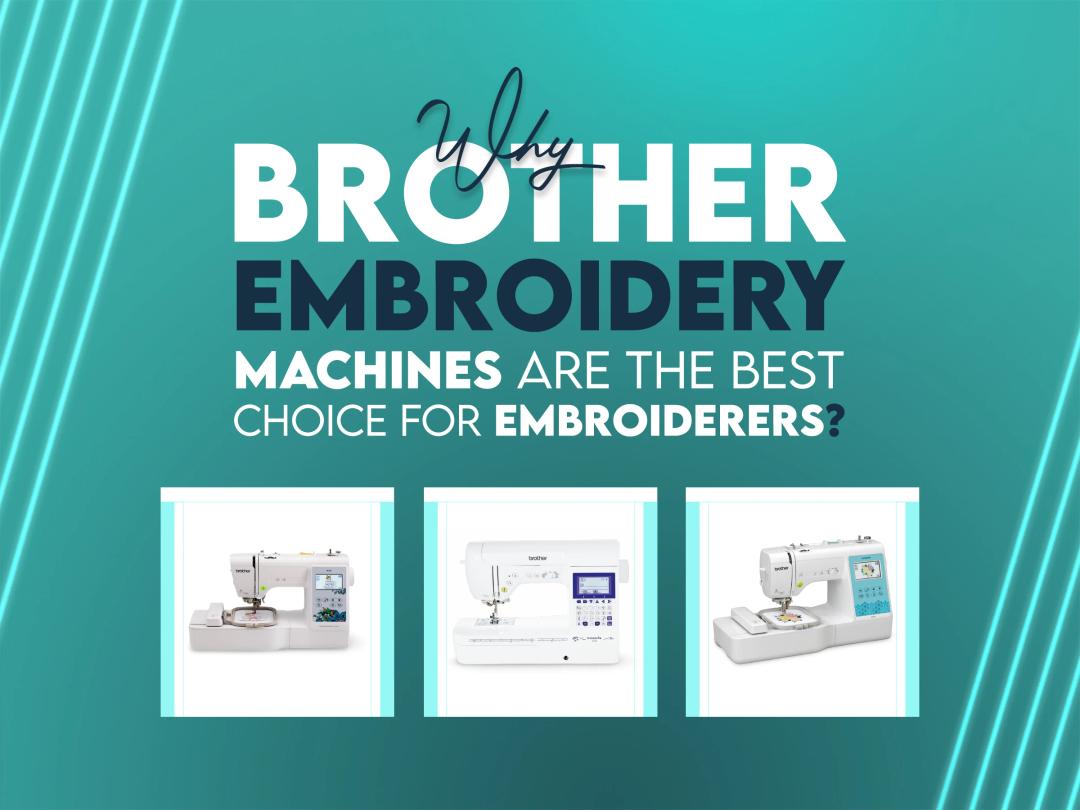
Brother designed the PR680W for small businesses that want commercial results without dealing with a large industrial setup. This machine gives startups a strong entry point into professional embroidery. If you run a home-based embroidery business, this machine helps you produce clean logos, cap designs, and uniform branding with confidence.
The PR680W works well for startups because it combines ease of use with commercial performance. You do not need years of experience to operate it. The touchscreen interface guides you through design placement, color sequence, and thread settings. As long as you load a properly digitized file, the machine runs smoothly and delivers consistent stitch quality.
The 6-needle system allows you to load six thread colors at once. You reduce manual thread changes and save production time. This feature helps when you stitch business logos that include multiple colors.
6 needles.
Maximum speed: 1,000 stitches per minute.
Embroidery area: 8" x 12" (200mm x 300mm).
10.1” LCD touchscreen display.
Built-in camera positioning system.
Automatic needle threading.
Wireless LAN connectivity.
Cap frame compatibility.
Automatic thread trimming.
This machine supports flat embroidery and cap embroidery, which gives startups flexibility. If you plan to offer custom hats and branded apparel, this machine supports both.
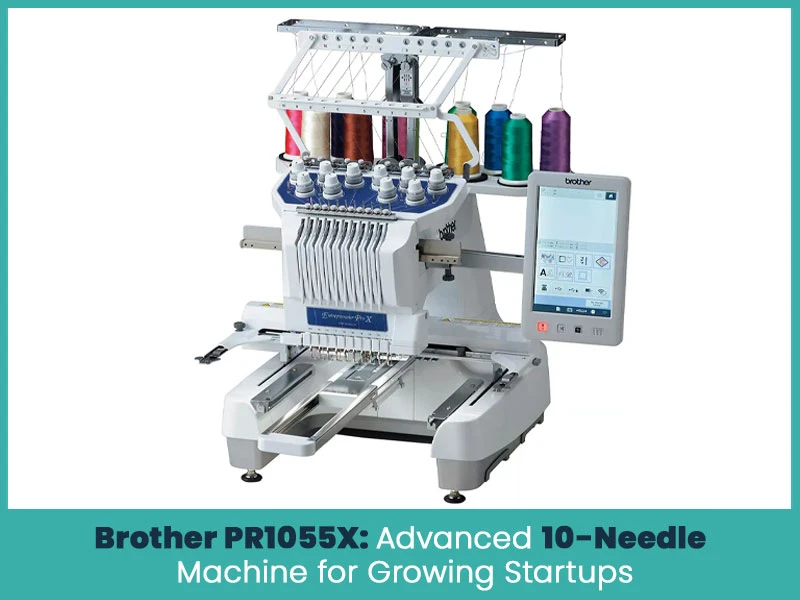
Brother built the PR1055X for businesses that already receive steady embroidery orders and want faster production. This machine gives startups more control, more needle capacity, and more embroidery space.
The 10-needle system allows you to load ten thread colors at once. You avoid constant thread changes and reduce downtime. If you stitch detailed logos with gradients or multiple shades, this machine handles them efficiently.
The PR1055X also includes advanced positioning technology. The built-in camera helps you align designs accurately on garments, caps, and jackets. This feature reduces placement errors and fabric waste.
10 needles.
Speed up to 1000 stitches per minute.
Embroidery area: 14" x 8" (360mm x 200mm).
Snowman camera positioning system.
10.1” HD LCD display.
944 built-in designs.
37 built-in fonts.
Automatic thread trimming.
Wireless data transfer.
Cap frame support.
This machine works well for startups that want to move from small jobs to medium-sized commercial production. It increases speed without making the operation complicated.
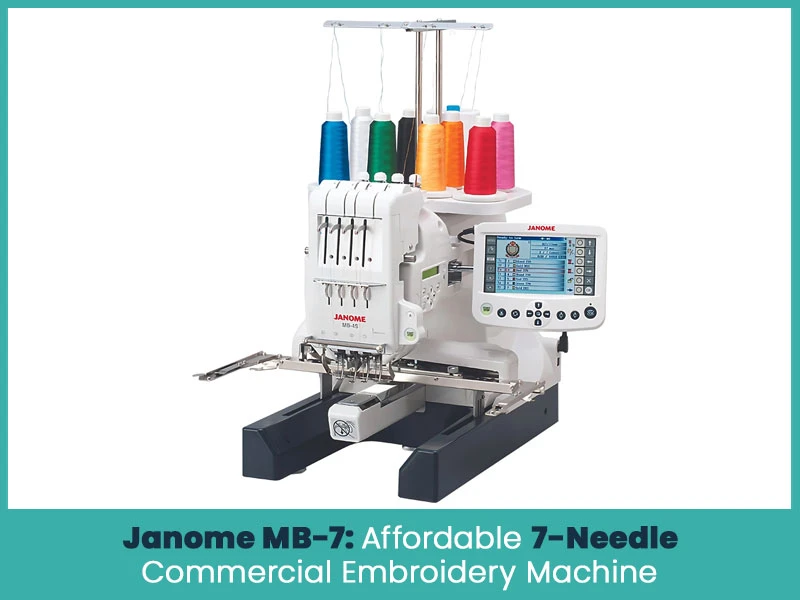
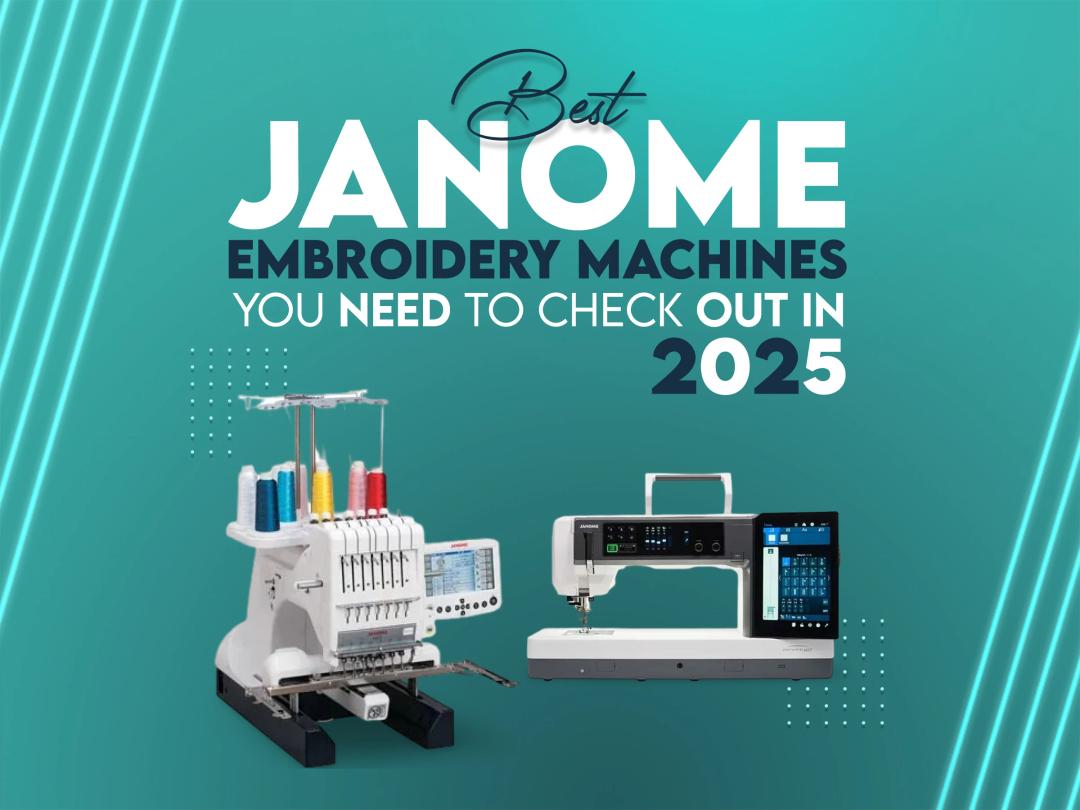
Janome designed the MB-7 for businesses that want a commercial embroidery machine at a controlled budget. This machine offers strong stitch stability and clean output.
The 7-needle setup gives you more flexibility than a 6-needle system while keeping the price lower than larger 10 or 15-needle machines. Many startups choose this machine because it supports Tajima (.DST) file format, which most professional digitizers use.
The MB-7 focuses on durability and consistent thread tension. It may not run as fast as some higher-end machines, but it delivers reliable performance for uniforms, logos, and small production batches.
7 needles.
Speed: 800 stitches per minute.
Embroidery area: 9.4" x 7.9" (238mm x 200mm).
Supports .DST format.
Automatic thread cutter.
LED lighting system.
Remote screen capability.
Multiple hoop sizes.
This machine suits startups that prioritize stitch quality and controlled production growth.
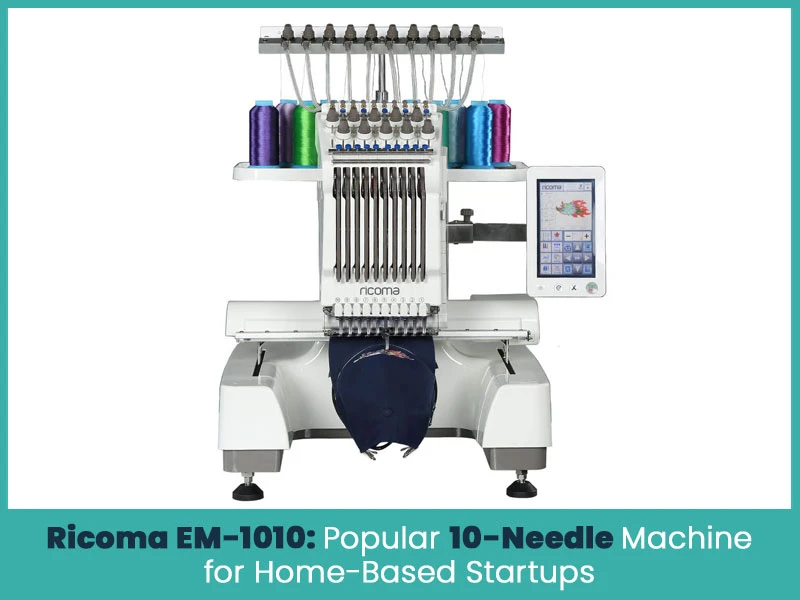
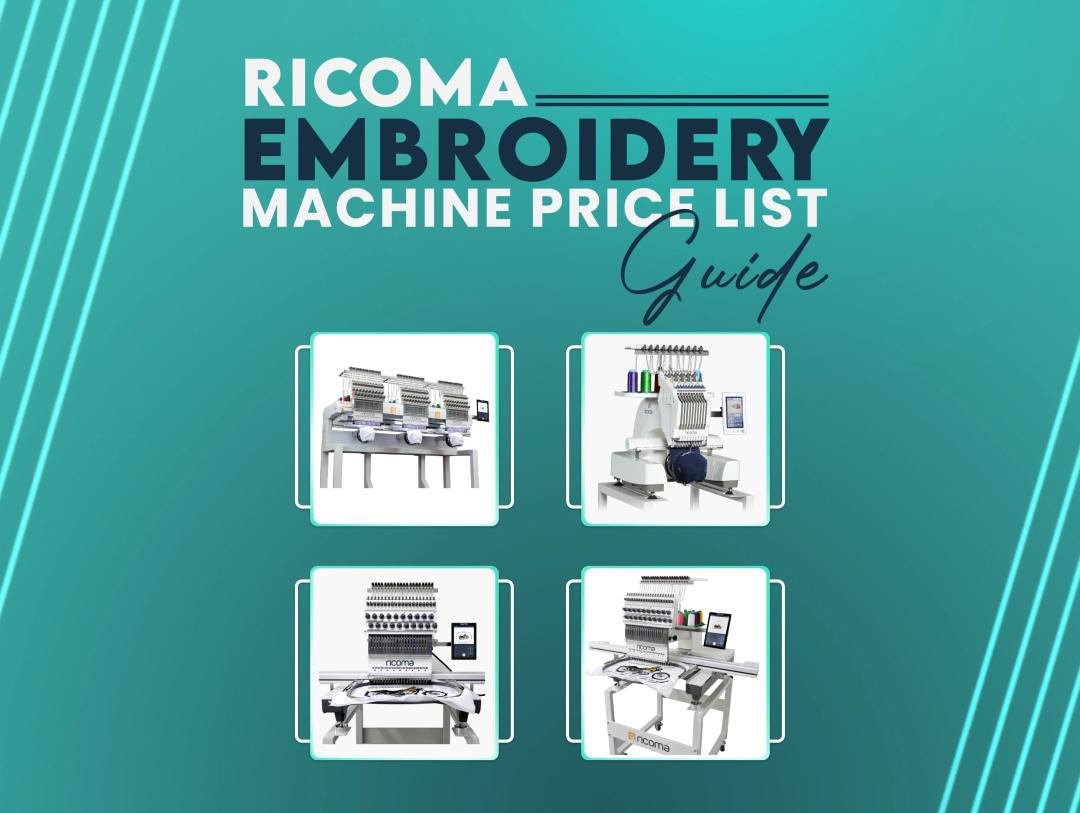
Ricoma developed the EM-1010 for small businesses that want commercial-level production in a compact setup. Many home-based embroidery startups choose this machine because it offers industrial features at a manageable cost.
The 10-needle system increases efficiency. You load multiple thread colors and let the machine handle automatic color changes. This feature saves time during logo embroidery and custom apparel production.
The EM-1010 supports both flat embroidery and cap embroidery. The 270-degree cap system allows smooth stitching on structured hats.
10 needles.
Speed up to 1,000 stitches per minute.
Embroidery area: 15.7" x 8.3" (400mm x 210mm).
7-inch HD touchscreen.
270° cap embroidery system.
Automatic thread trimming.
Built-in lettering fonts.
USB and LAN connectivity.
Heavy-duty metal frame.
This machine fits startups that want flexibility, decent speed, and solid production capacity.
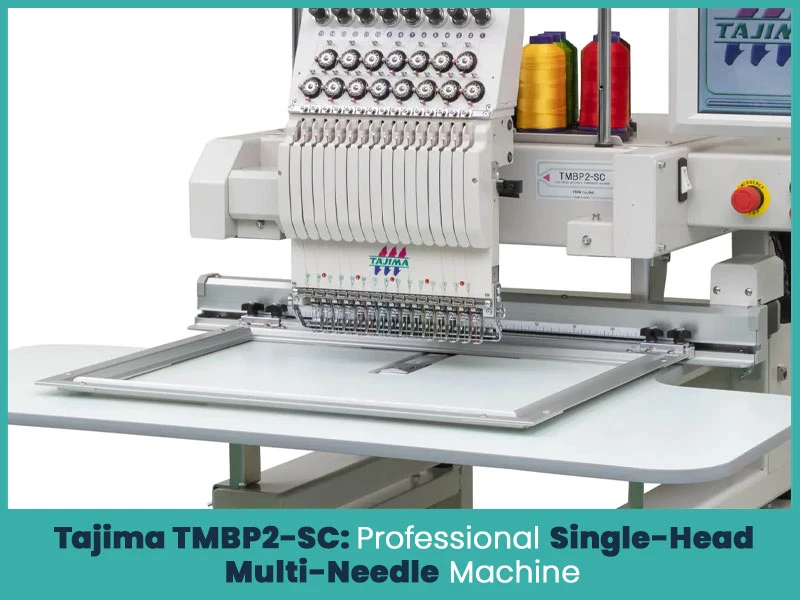
Tajima built its reputation on industrial embroidery systems. The TMBP2-SC reflects that standard. This machine targets startups that plan to operate full-time and handle demanding production schedules.
Tajima engineered this model for stability, tension accuracy, and long working hours. If you plan to stitch uniforms, corporate branding, or bulk orders daily, this machine supports continuous operation.
The strong frame reduces vibration and maintains stitch precision. The advanced thread control system keeps tension balanced across different fabric types.
15 needles.
Speed up to 1000 stitches per minute.
Industrial-grade metal structure.
Automatic thread trimming.
Advanced tension control system.
Cap and flat embroidery capability.
Digital control panel.
This machine is costly but it delivers long-term durability and consistent stitch performance.
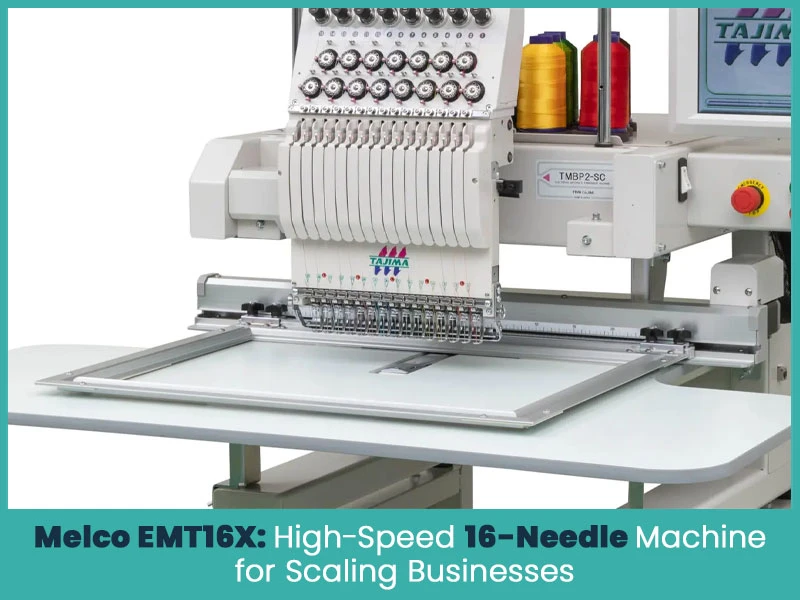
Melco designed the EMT16X for businesses that plan to scale quickly. This machine supports high-speed embroidery and modular expansion.
The 16-needle configuration allows you to load complex color combinations without interruption. If you handle detailed logos or large production batches, this machine increases workflow efficiency.
Melco also allows you to connect multiple units as your business grows. You can start with one head and expand later.
16 needles.
Speed up to 1500 stitches per minute.
Large embroidery area (up to 16.1" x 15.8").
Laser alignment system.
Acti-Feed thread control.
Modular multi-head expansion capability.
Industrial build quality.
This machine supports startups that aim to move into high-volume embroidery production.
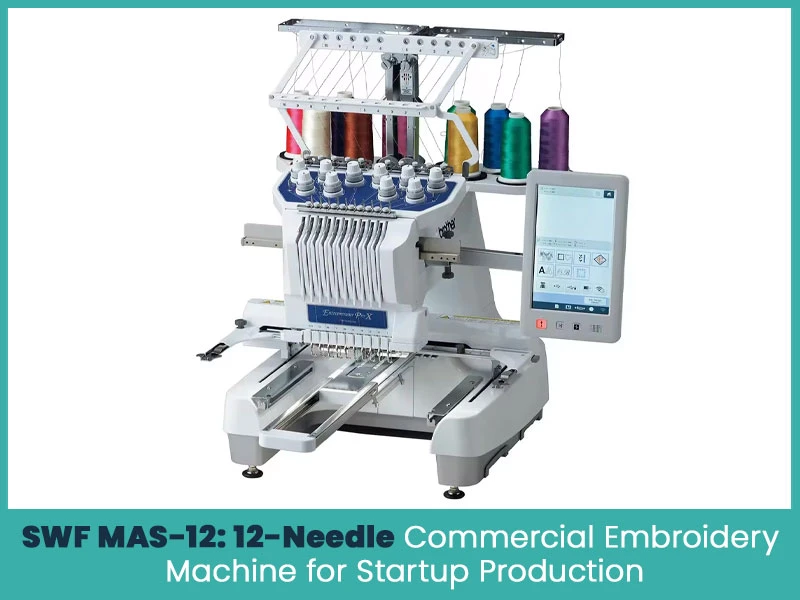
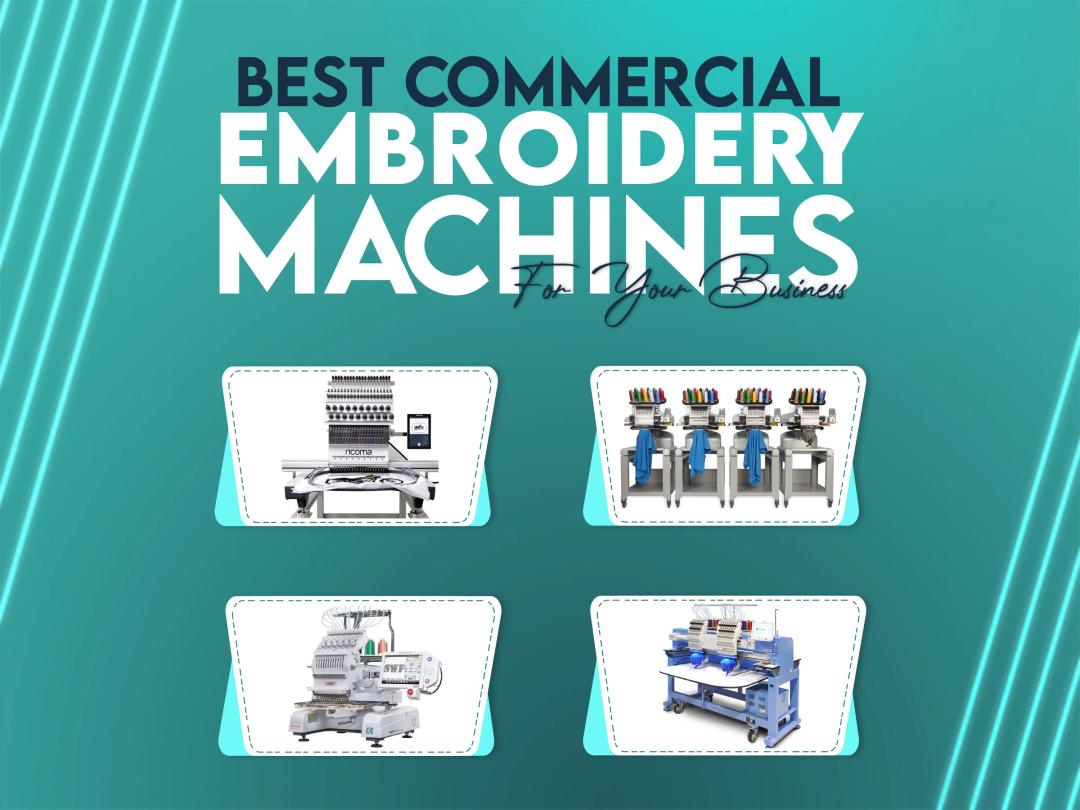
SWF produces durable commercial embroidery machines. The MAS-12 gives a strong balance between needle count and production power.
The 12-needle system supports efficient color management. You reduce thread changes and increase stitching speed. This machine works well for small commercial shops that handle steady client orders.
12 needles.
Speed up to 1000 stitches per minute.
Large embroidery field.
Automatic color change.
Industrial motor system.
Cap and flat embroidery support.
Stable frame construction.
This machine fits startups that expect regular production demand.
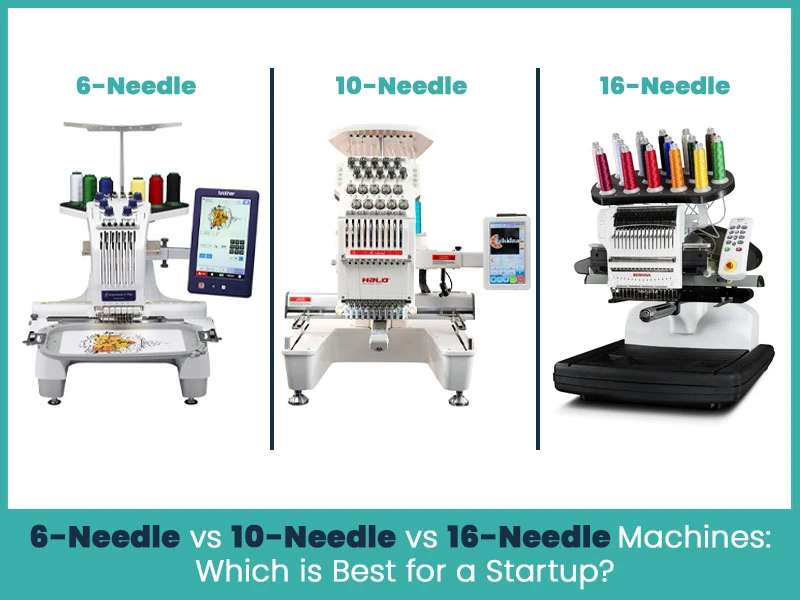
You should choose the needle count based on your production goals.
A 6-needle machine suits beginners and home businesses. It handles small orders and simple multi-color logos. It requires a lower investment and easier management.
A 10-needle machine gives you balanced production capacity. It supports more complex logos and reduces manual thread changes. Many growing startups choose this option because it increases efficiency without high cost.
A 16-needle machine supports high-volume production. It handles detailed color combinations and reduces downtime significantly. If you plan to scale quickly and accept bulk contracts, this option works best.
If you handle small orders, a 6-needle machine works well. If you stitch multi-color designs daily, 10 or more needles improve workflow and output.
Multi-needle embroidery machines help startups improve profitability through better efficiency.
They reduce thread change time because the machine switches colors automatically. You save labor hours on each order.
They increase production speed. Faster stitching allows you to complete more garments in one working day.
They handle bulk orders efficiently. You accept larger contracts without worrying about delays.
They improve stitch consistency. Stable tension and automatic trimming reduce errors and rework.
They reduce working costs. One operator can manage production as long as the machine runs smoothly.
When you complete orders faster, you accept more clients. Hence, your revenue grows while your working hours remain stable.
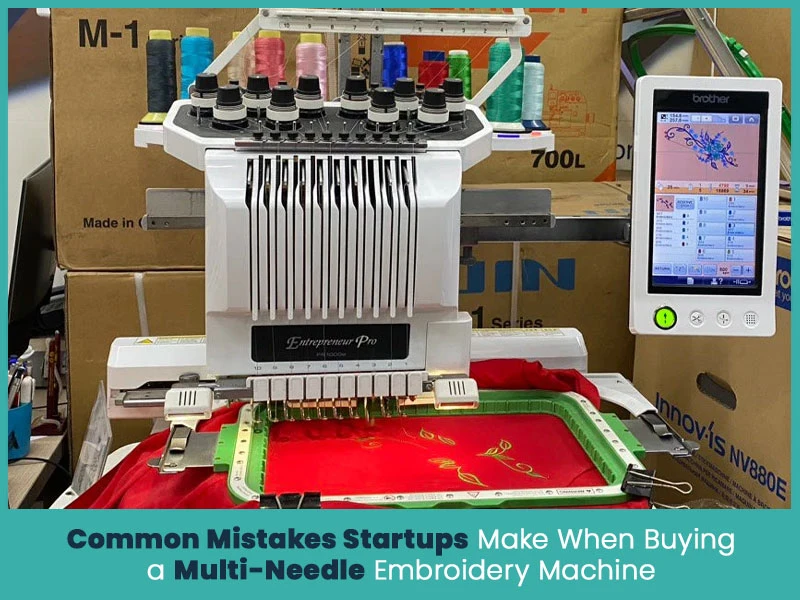
Many startups make avoidable mistakes during purchase.
Some buyers focus only on price. They choose the cheapest machine without checking durability, needle count, embroidery area etc.
Some ignore embroidery field size. A small embroidery area limits jacket back designs and large logo orders.
Some do not check after-sales support. Technical service and spare parts availability matter in commercial embroidery.
Some choose too few needles for long-term goals. They outgrow the machine quickly and need another upgrade.
Some underestimate maintenance costs. Regular servicing, needles, and parts add ongoing expenses.
Y
You should treat a multi-needle embroidery machine as a long-term investment. When you choose carefully, you support steady business growth.
Choose the best multi-needle embroidery machines for startups (2026) depends on your business size, budget & growth plan.
For start-ups, machines like Brother PR680W or Ricoma EM-1010 will help you begin smoothly. If you plan to scale fast, Melco or Tajima is best.
However, if you have a startup and receive bulk embroidery orders but cannot afford a multi-needle embroidery machine right now, there is no need to worry. True Digitizing is here for you. We digitize your designs carefully. We manage bulk orders, understand deadlines, and deliver high quality embroidery files within the promised time frame.
Nick William has been immersed in the world of embroidery digitizing for over 20 years, earning 25 industry awards throughout his career. As a 3rd generation embroidery expert, Nick’s journey started in his family’s workshop, where he learned the art of digitizing before the rise of modern software. He has worked with leading commercial embroidery businesses and has shared his expertise with over 75,000 home and professional embroiderers. As an author at True Digitizing, Nick is passionate about teaching others how to create beautiful, precise designs through easy-to-follow tutorials and expert advice.
Categories
DST File Format Explained: How to Create & Use for Embroidery
28-02-2026
Janome 550E vs Baby Lock Flare | Best Mid-Range Embroidery Machine?
26-02-2026
Choose the Right Fabric for Embroidery
20-02-2026

Most Common Types of Threads to Use in Machine Embroidery
12-02-2026
Best Thread Tension 101 | A Guide for Embroidery Machines
09-02-2026
Mastering Small Lettering in Machine Embroidery
04-02-2026
How to Do Machine Embroidery on Sleeves Like a Pro
04-02-2026
How to Stop Needle Breakage in Embroidery Machines
29-01-2026
Embroidery Stitches Explained | How to Choose the Right Stitch Type for Your Design
27-01-2026
Which is the Best Embroidery Machine Brand in 2026 (Home & Commercial Use)
22-01-2026
Asked Questions