




At True Digitizing, we transform your creative spark into flawless, high-quality embroidery digitized designs that bring your vision to life.
Our Blogs
We Accept

Copyright 2025 Truedigitizing






At True Digitizing, we transform your creative spark into flawless, high-quality embroidery digitized designs that bring your vision to life.
We Accept
Copyright 2025 Truedigitizing
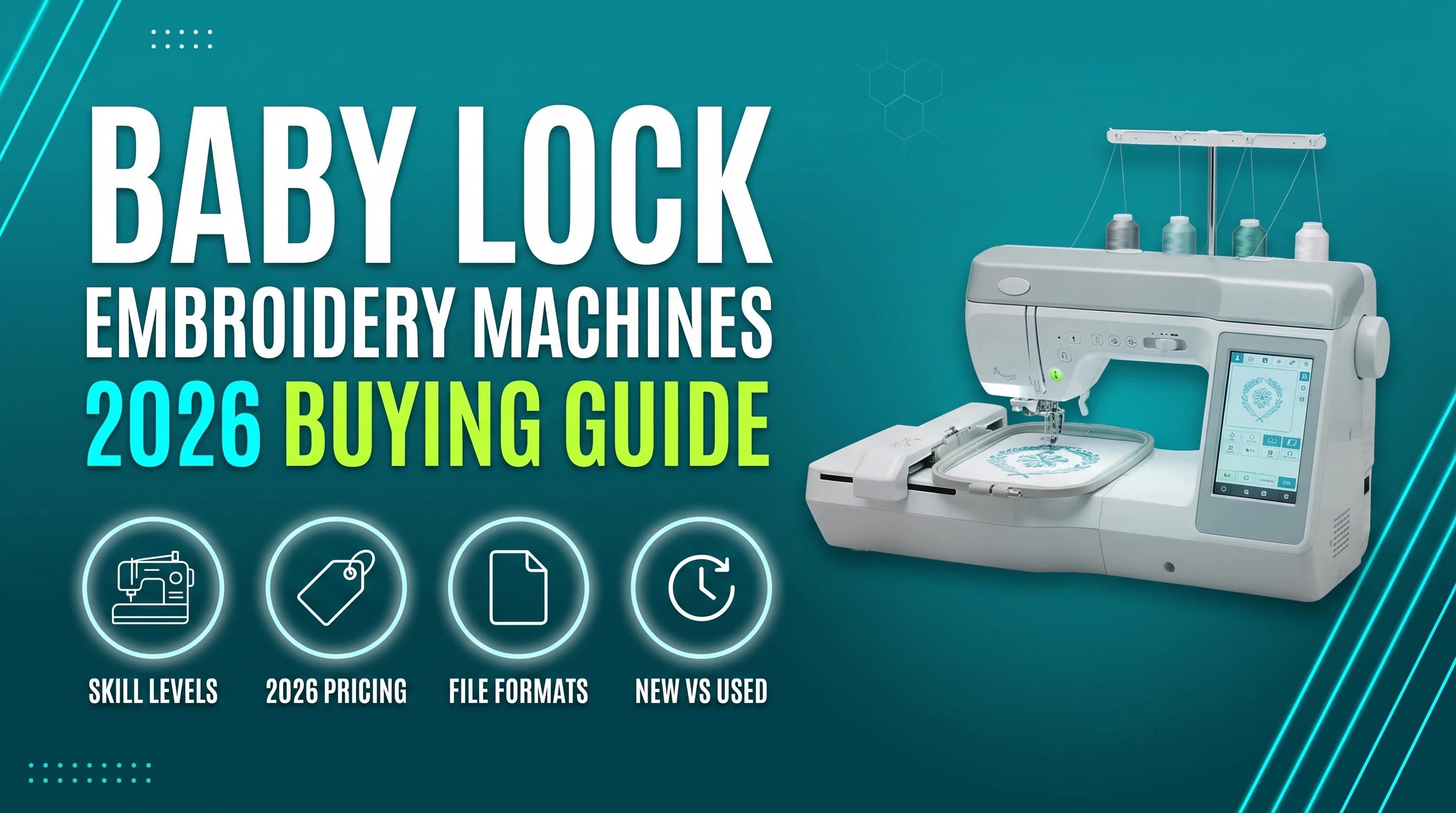


The best Baby Lock embroidery machines for 2026 are the Aurora or Bloom for beginners, the Flare or Vesta for mid-level hobbyists, and the Meridian 2, Altair 2, Array, or Radiance for advanced and commercial use. Prices run from about $1,319 for the entry-level Aurora to $14,574 for the 6-needle Array, and several newer models (Luna, Ursa, Reflection, Radiance, Venture 2) have replaced machines that older buying guides still list.
Shopping for Baby Lock embroidery machines gets confusing fast, mostly because so many buying guides online are still describing machines that Baby Lock has already replaced. If you're comparing Baby Lock embroidery machines right now, the lineup has shifted meaningfully since early 2025: new models like the Luna, Ursa, Reflection, and Radiance have joined the catalog, the Vesta moved from a "previous model" to a current combination machine, and the old Venture is now the Venture 2.
This guide walks through Baby Lock's actual current 2026 lineup — pulled directly from Baby Lock's own retail listings — broken down by skill level, with real pricing, hoop sizes, and a full comparison table. We'll also cover what file format your Baby Lock machine actually needs, since that trips up more first-time buyers than the machine choice itself. If you eventually need a design turned into a stitch-ready file for whichever model you pick, that's exactly what True Digitizing does every day.
Already picked a Baby Lock machine? Let True Digitizing handle the files.
True Digitizing has completed 20,000+ designs for USA embroiderers over 13+ years. Submit your logo or artwork and get back a stitch-ready file matched to your machine's hoop size and format.
Get a Free Quote — True DigitizingBaby Lock splits its lineup into combination machines (sewing plus embroidery in one unit) and embroidery-only machines built for higher stitch speeds and larger designs. Where you land depends less on budget alone and more on how much you'll actually use the sewing side versus running embroidery projects back to back.
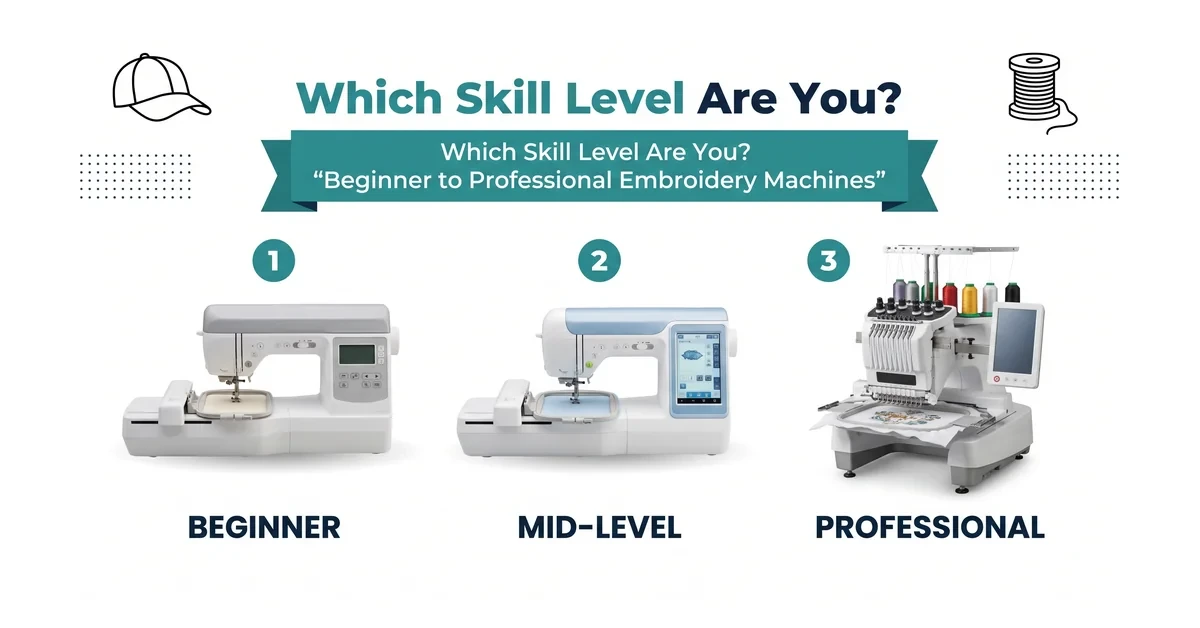
Beginners generally do best with the Aurora ($1,319), a compact combo machine with a portable design and an included extension table, or the Bloom ($2,969), which adds a larger embroidery area and 342 built-in designs with a knee lift for hands-free fabric control. Both are forgiving machines for learning the basics without a steep price commitment.
Mid-level users who've outgrown a beginner machine typically move to the Flare ($2,529), an embroidery-only model with on-screen editing and a 6.25"×10.25" hoop, or the Vesta ($3,959), a combination machine with the same hoop size plus a Color Sort feature and 293 built-in designs. Note that Vesta is a current model in Baby Lock's 2026 lineup, not a discontinued one — older buying guides that list it under "previous models" are out of date.
Professionals and small businesses running regular volume should look at the Meridian 2 ($9,349), which adds quilting capability alongside embroidery on an 11.25" workspace, the Altair 2 ($12,099) with its 10.1" touchscreen and needle beam for precise placement, or a multi-needle model like the Array ($14,574, 6 needles) or Venture 2 (10 needles, price by dealer quote) for shops running multi-color logos without constant rethreading.
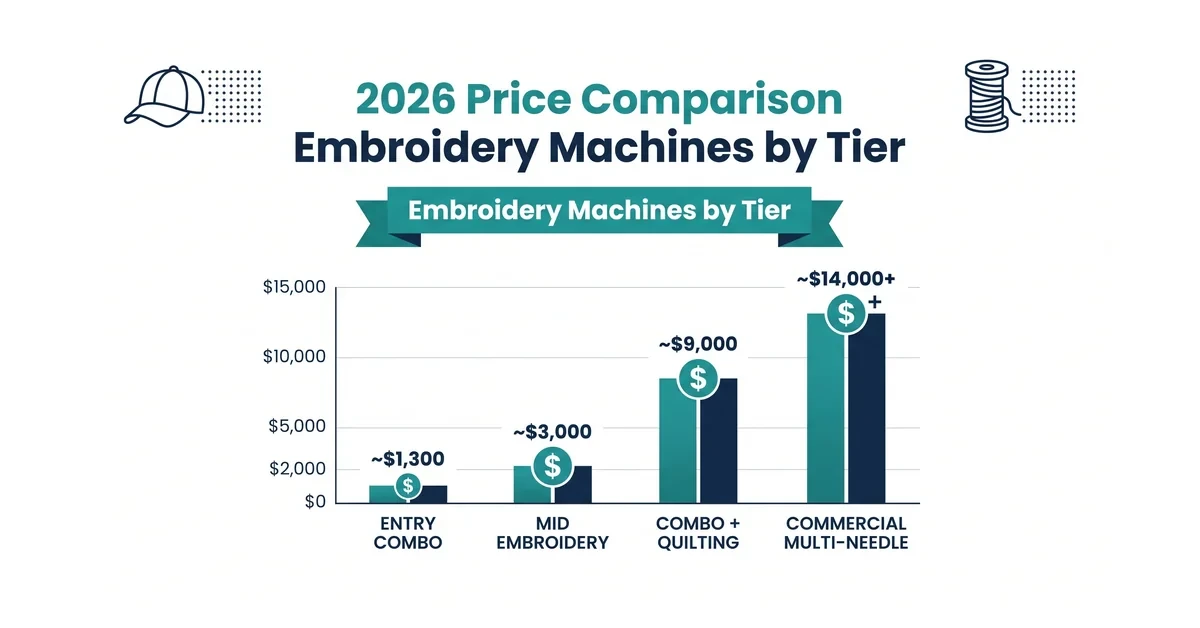
Pricing is where most older round-ups go stale fastest, so here's what Baby Lock's own retail listings showed at the time of this refresh (September 2026). Entry-level combo machines start at $1,319 (Aurora) and $2,969 (Bloom). Embroidery-only machines run from $2,529 (Flare) up to $6,599 (Reflection, a newer 9.5"×14" model) and $8,029 (Capella, single-needle with 481 built-in designs). Mid-to-high combination machines land between $3,959 (Vesta) and $12,099 (Altair 2), with the Meridian 2 at $9,349 sitting in between as the quilting-capable option. Multi-needle commercial machines top the range: the 6-needle Array lists at $14,574, while the 10-needle Venture 2 and the flagship Radiance and Radiance Limited Edition are priced by dealer quote rather than posted online, which is typical for higher-end commercial models.
A few corrections worth flagging if you've seen this lineup described elsewhere: Solaris Vision, once Baby Lock's flagship IQ Designer machine, no longer appears in the current official lineup and has effectively been succeeded by the Radiance line. The original Venture has been replaced by the Venture 2. And the Aerial, sometimes listed as an older or discontinued model, is still sold as a current combination machine at $8,359. If you're comparing a listing for the Pathfinder specifically, confirm with an authorized Baby Lock dealer whether it's still in production — it no longer appears on Baby Lock's own current machine pages.
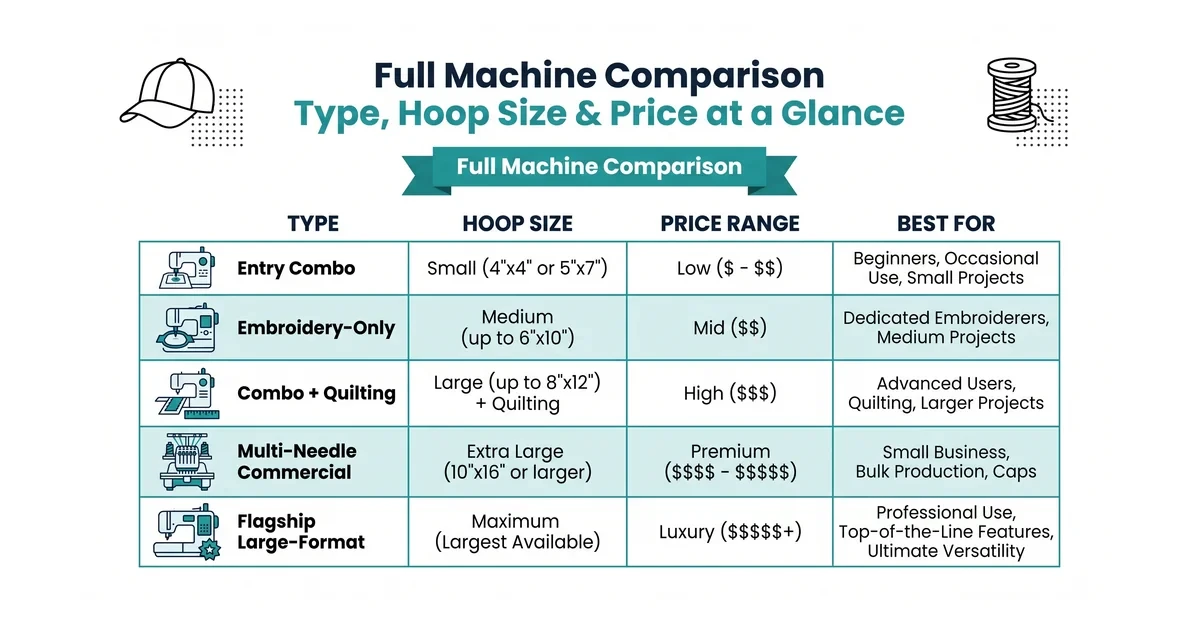
A combination machine handles both regular sewing and embroidery on one unit, which is the more practical choice if you're still doing garment construction, quilting, or alterations alongside embroidery. An embroidery-only machine skips the sewing functions entirely, which usually means a larger hoop, faster stitch speeds, and a design built purely around embroidery output — the better fit once embroidery becomes your main project type rather than a side feature.
| Model | Type | Hoop / Field | Price (2026)* | Best For |
|---|---|---|---|---|
| Aurora | Combo | 4"×4" | $1,319 | First-time buyers |
| Bloom | Combo | 5"×7" | $2,969 | Beginners wanting more room |
| Flare | Embroidery-only | 6.25"×10.25" | $2,529 | Mid-level hobbyists |
| Vesta | Combo | 6.25"×10.25" | $3,959 | Combo users wanting Color Sort |
| Luna | Combo | 8"×14" | Check with dealer | Growing hobbyists needing a bigger field |
| Reflection | Embroidery-only | 9.5"×14" | $6,599 | Serious hobbyists, small business |
| Capella | Embroidery-only | 7-7/8"×11-3/4" | $8,029 | Single-needle small business |
| Meridian 2 | Combo / quilting | 11.25" workspace | $9,349 | Quilters who also embroider |
| Altair 2 | Combo | 11.25" workspace | $12,099 | Advanced hobbyists, small studios |
| Array | Multi-needle (6) | 7-7/8"×11-3/4" | $14,574 | Small commercial shops |
| Venture 2 | Multi-needle (10) | 7-7/8"×14" | Quote only | High-volume commercial production |
| Radiance | Combo, flagship | 11-5/8"×18-1/4" | Quote only | Large-format professional embroidery |
*Prices confirmed on Baby Lock's own embroidery machine listings and full machine catalog at the time of this refresh (September 2026) and are subject to change — always confirm current pricing directly with an authorized Baby Lock dealer before buying.
Whichever Baby Lock model you choose, get files that actually fit it
True Digitizing delivers stitch-ready files within 24 hours — trusted by 5,000+ USA embroiderers. Send over your logo and we'll match the file to your machine's hoop size and format.
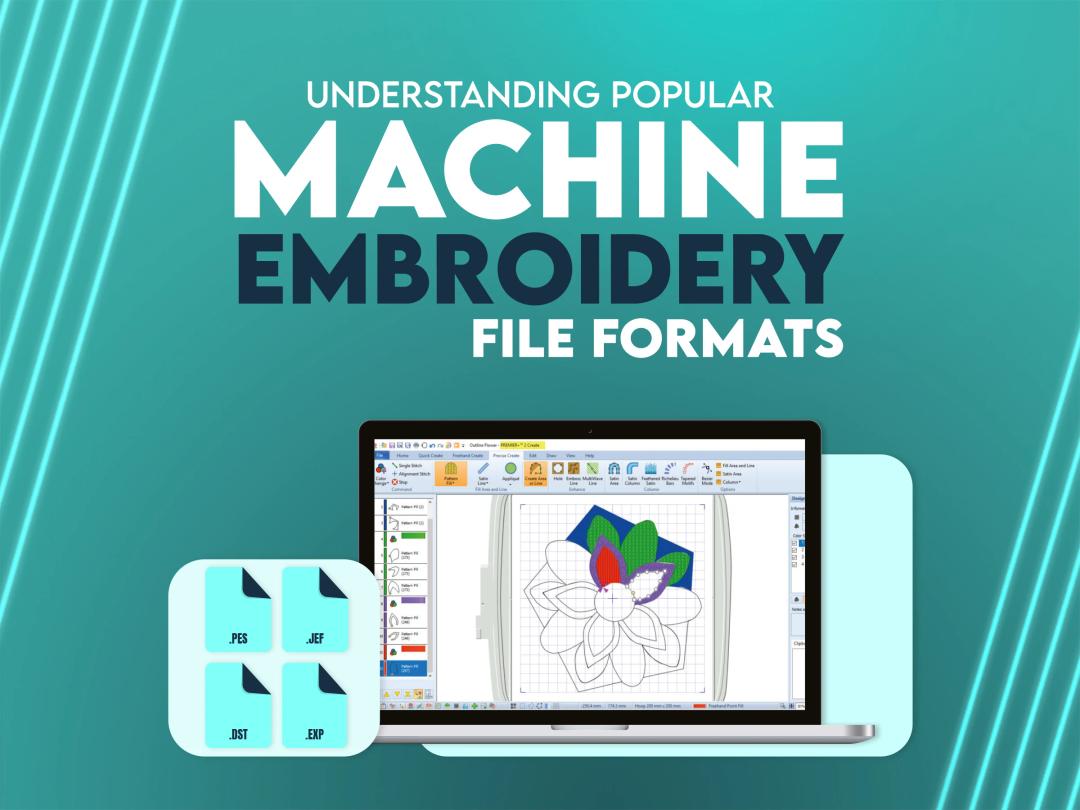
Start My Order at True DigitizingFile compatibility trips up more first-time Baby Lock owners than choosing between models. PES is the primary format across the entire current Baby Lock lineup and is the most widely available format from design marketplaces and digitizing services. PHC is Baby Lock's own format for advanced editing inside Palette software. DST, the Tajima universal format, is accepted by most Baby Lock models over USB or Wi-Fi and is the safest choice if you're not sure which software created the design. PEC, an older Baby Lock format, still works on some previous-generation models but has largely been superseded by PES on current machines.
Most current Baby Lock machines load designs via USB, and newer Wi-Fi-enabled models like the Flare and Altair 2 let you send files directly from a computer without a USB stick. If your artwork starts as a logo, photo, or vector file rather than an embroidery file, it needs to be digitized first — True Digitizing's custom embroidery digitizing service converts artwork into a stitch-ready file in your Baby Lock's exact format, and our vector tracing service handles logos that start as a low-resolution image or PDF. For a deeper breakdown of every format machines like these accept, see our full embroidery file formats guide.
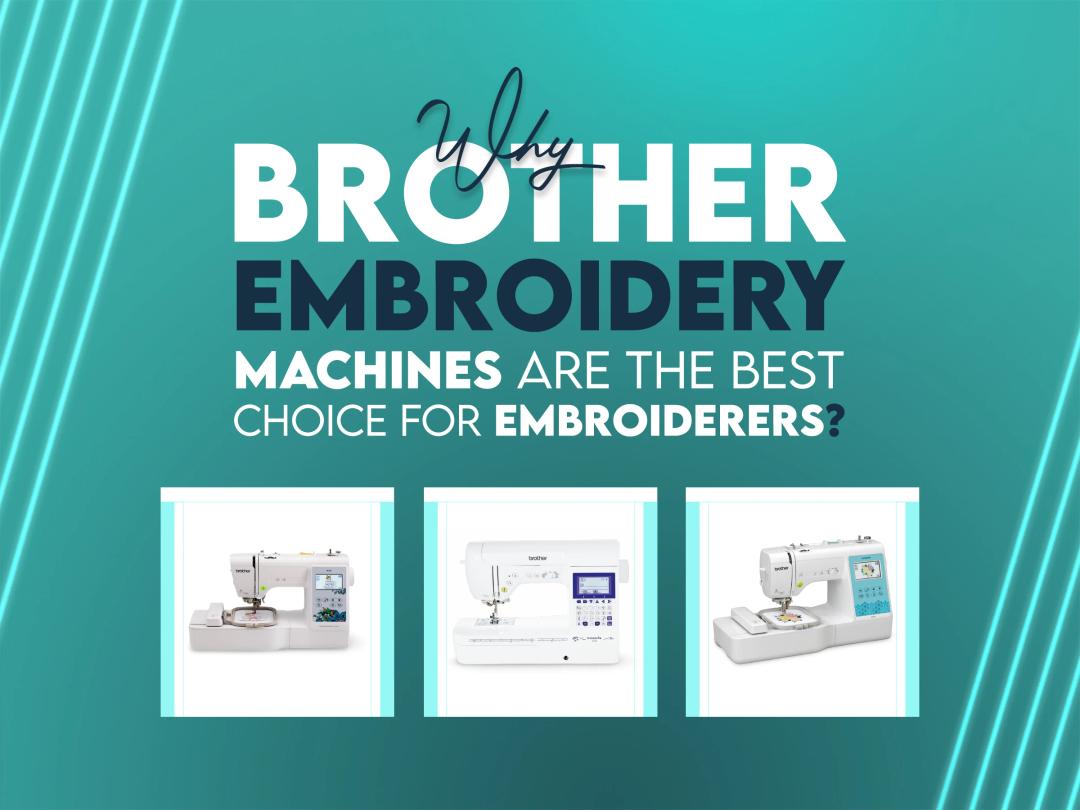
Both brands make reliable combination and embroidery-only machines, and the real difference usually comes down to dealer support and hoop options in your area rather than one brand being universally better. Baby Lock tends to be favored by hobbyists who want simpler on-screen navigation and models like the Vesta and Flare that focus on ease of use, while Brother's lineup spans a wider price range from budget home machines up through commercial multi-needle units. If you're specifically weighing a mid-range purchase, our Janome 550E vs. Baby Lock Flare comparison breaks down how the Flare stacks up against a similarly priced competitor, and shops considering higher needle counts should also check our best multi-needle embroidery machine guide before deciding between Baby Lock's Array/Venture 2 and Brother's commercial lineup.
A used Baby Lock machine can lower the entry price significantly, but discontinued models like the original Venture or older Aerial units can be harder to get serviced once parts availability drops. If you're buying used, ask to see a live stitch-out, request maintenance history, and confirm the model is still supported by Baby Lock's dealer network before committing. First-time buyers weighing new versus used across brands should apply the same checklist regardless of manufacturer.
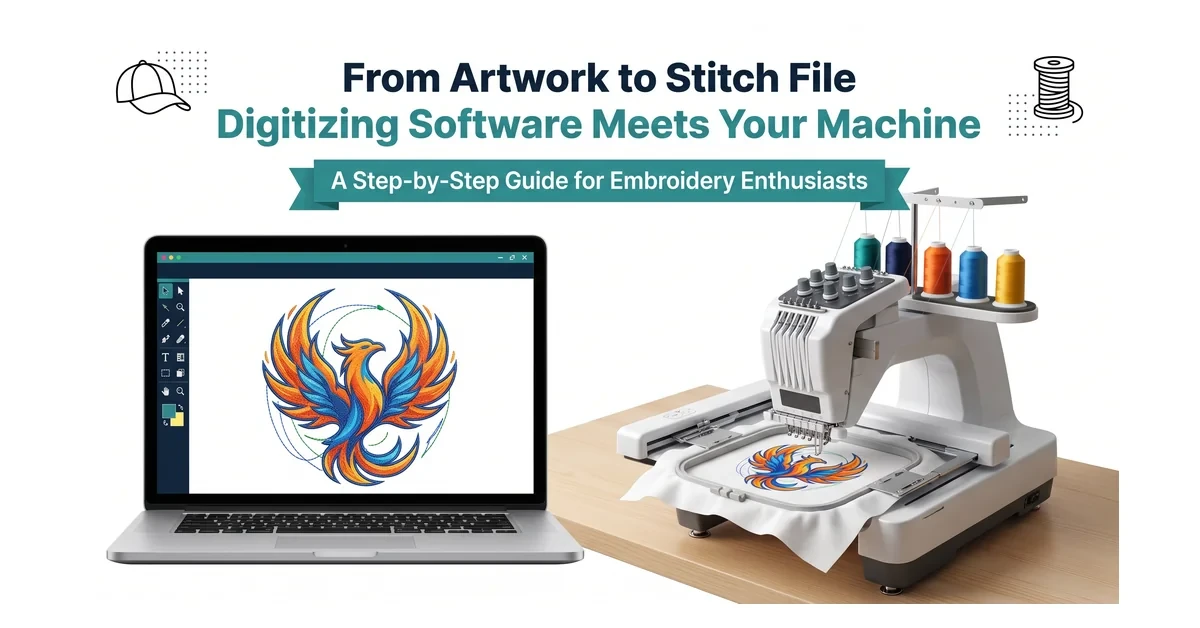
The machine is only half of what makes an embroidery project look professional — the stitch file behind it determines whether a design runs cleanly or puckers, gaps, or breaks thread mid-run. True Digitizing digitizes logos and artwork specifically for the hoop size and format your Baby Lock model uses, whether that's a 4"×4" Aurora hoop or an 18"×11-5/8" Radiance field. Combined with a properly chosen machine from the comparison table above, a well-digitized file is what actually gets you consistent, professional-looking results.
True Digitizing has helped 5,000+ USA embroiderers get professional stitch files since 2013. Submit your artwork and get a machine-ready file back, matched to your exact Baby Lock model.
Get My Design Digitized by True Digitizing →Fast turnaround · truedigitizing.com · 100% satisfaction guaranteed
TrueDigitizing's team of embroidery digitizers and file conversion experts — delivering practical guides for home hobbyists and commercial shops alike. Our specialists cover the full range of embroidery production: custom digitizing for machine embroidery, vector art conversion, and physical embroidered patch manufacturing — with a 6-hour turnaround on digital files and worldwide patch delivery in 5 business days. Every article we publish comes from the same people handling real production orders daily. When we write about stitch density, underlay settings, or file formats, it is because we work with these variables across hundreds of client files every week — not because we researched them from the outside.
Categories
Embroidery Digitizing Services: Which Type Do You Need?
17-08-2026
How to Remove Embroidery From Any Fabric — Step-by-Step Guide 2026
15-07-2026
Is SVG a Vector File? Yes — SVG vs EPS, PNG, PDF Vector Formats you need to know
08-07-2026
Embroidery Trends 2026: What's Hot in Machine & Hand Embroidery | TrueDigitizing
26-06-2026
Top Best Embroidery Digitizing Software in 2026
06-05-2026
Best Multi-Needle Embroidery Machines for Startups (2026)
28-02-2026
DST File: The Complete Guide (What It Is, How to Create, Convert & Use in 2026)
28-02-2026
Janome 550E vs Baby Lock Flare | Best Mid-Range Embroidery Machine?
26-02-2026
Choose the Right Fabric for Embroidery
20-02-2026
Advanced Techniques in Embroidery Digitizing
19-02-2026
Asked Questions