







At True Digitizing, we transform your creative spark into flawless, high-quality embroidery digitized designs that bring your vision to life.
Our Blogs
We Accept

Copyright 2025 Truedigitizing






At True Digitizing, we transform your creative spark into flawless, high-quality embroidery digitized designs that bring your vision to life.
We Accept
Copyright 2025 Truedigitizing
The TrueDigitizing Editorial Team is made up of working embroidery digitizers and file conversion specialists who write from hands-on experience — not from a textbook. Our contributors have spent years navigating the exact problems our readers search for: converting PDF, JPG, SVG, and AI files into stitch-ready formats, choosing the right digitizing software for Mac and Windows, and getting clean results from both home machines like Brother, Singer, and Husqvarna Viking and industrial units like Tajima, Barudan, and ZSK. Our guides have reached over 100,000 embroiderers through topics that consistently rank — from DST file handling and SVG-to-PES conversion to hat embroidery setups and multi-needle machine selection. We write for both home hobbyists and commercial shops, with the same level of technical precision the industry demands. Every article published under this byline is reviewed by an active digitizer who uses the tools, runs the machines, and understands the difference between a setting that looks right on screen and one that actually holds up in production stitching. TrueDigitizing exists to close the knowledge gap in embroidery. Our editorial team is how we do it — one precise, practical guide at a time.
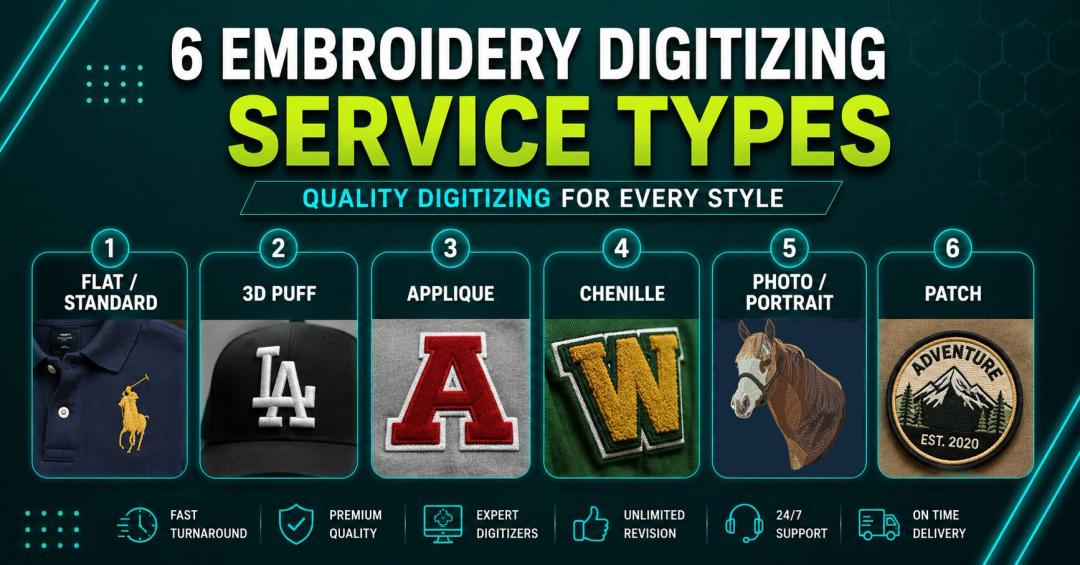
Embroidery digitizing services are not one product. There are six distinct types — flat, 3D puff, applique, chenille, photo and patch digitizing — and each one uses a different stitch strategy, a different underlay and a different price structure. The right choice depends on three things: what your artwork looks like, what garment it is going on, and how many pieces you are running. Match those three first, and the file you get back will stitch clean on the first sew-out.
To remove embroidery from any fabric, turn the garment inside out, slide a seam ripper under the bobbin threads on the back, and cut them in small sections. Then flip the garment right-side out and pull the top threads out with tweezers. Finish by removing the stabilizer backing — tear-away peels off, cut-away must be trimmed, and water-soluble dissolves with water. Most fabrics come out clean with no lasting damage when you work slowly and carefully.
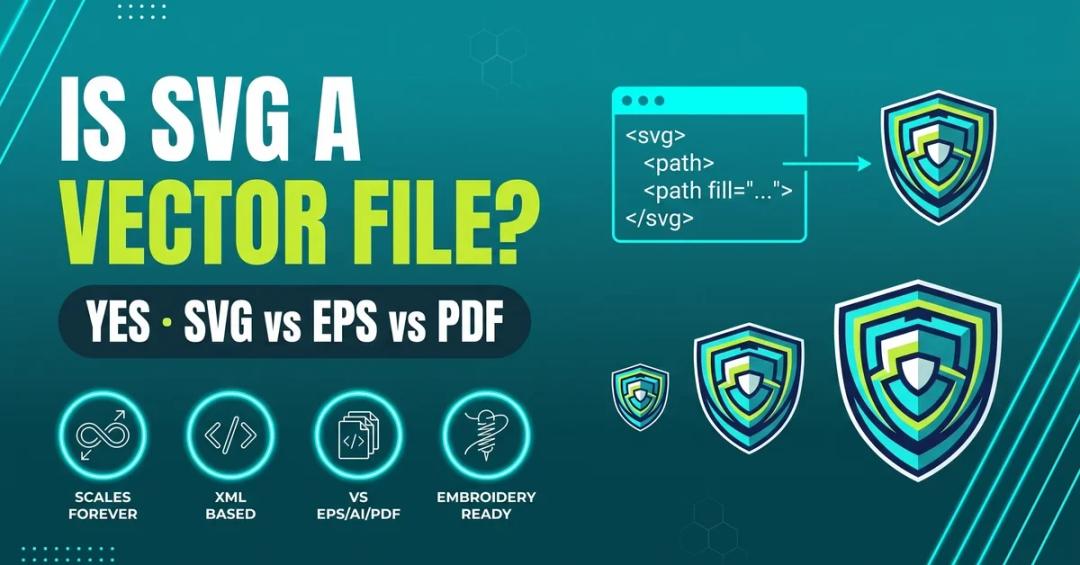
Yes, SVG (Scalable Vector Graphics) is a true vector file format. It stores images as mathematical path equations instead of a pixel grid, so an SVG logo scales from a favicon to a billboard without losing sharpness. Not every file with a .svg extension is purely vector — one can have a raster image embedded inside it — but a clean SVG is one of the best source files for web graphics, logo design, and embroidery digitizing.
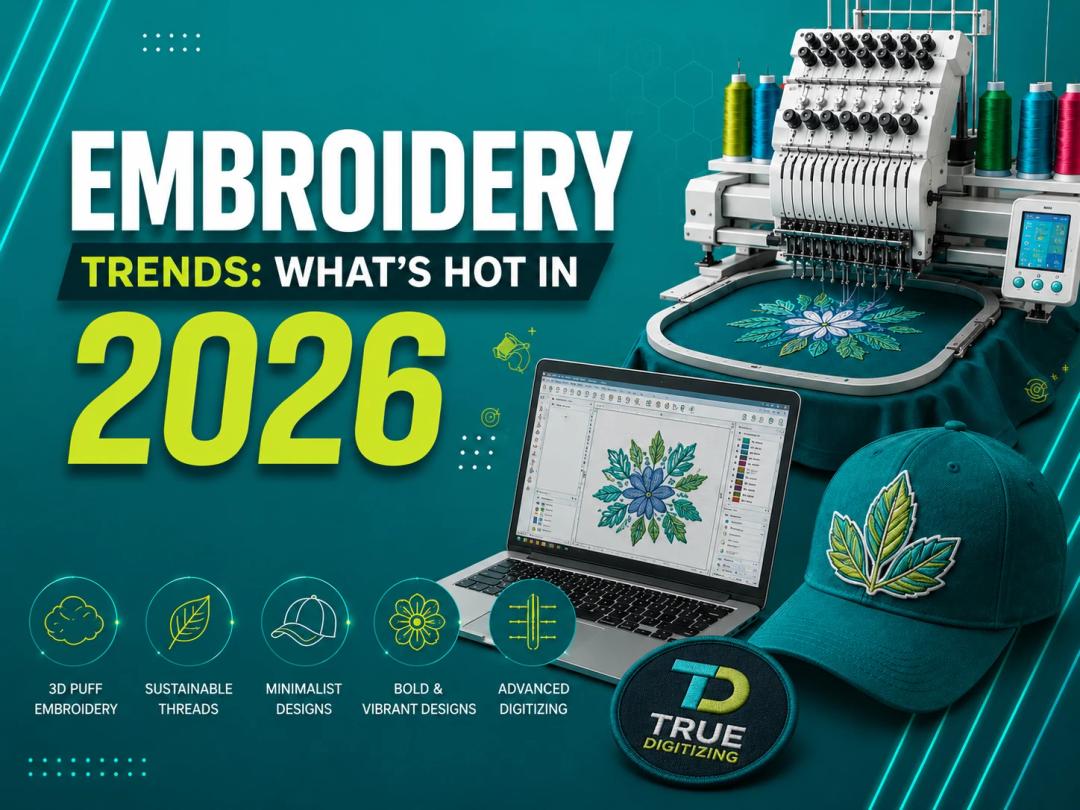
The biggest embroidery trends in 2026 are minimalist line art, oversized florals, 3D puff on structured hats, retro Y2K typography, metallic & iridescent thread, tone-on-tone micro embroidery, and appliqué mixed-media designs. Etsy's 2026 trend report calls it the "Soft Stitch Era" — a category-wide shift toward handcrafted texture and intentional, placement-driven design.
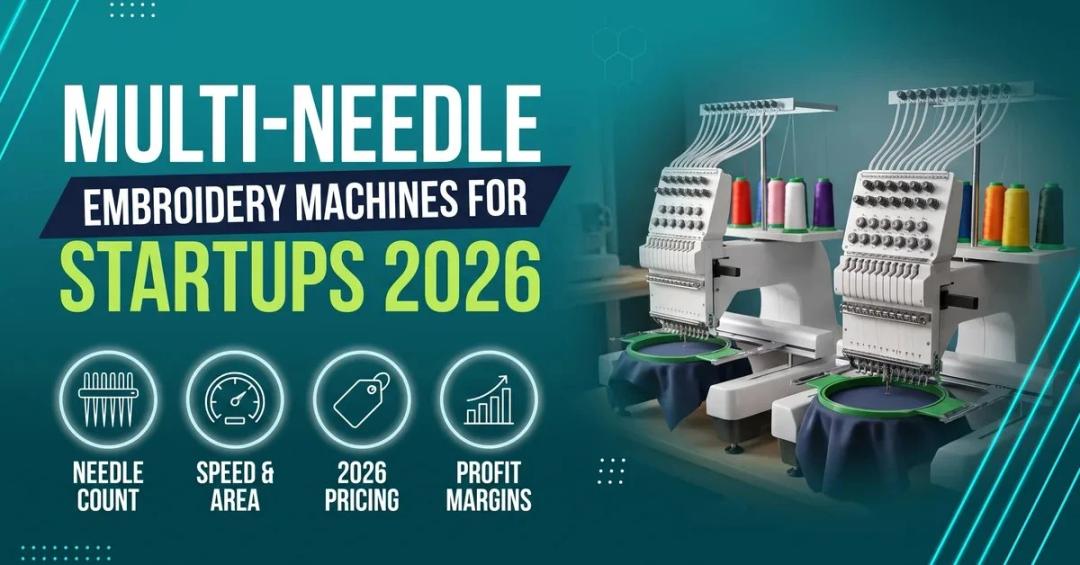
For most embroidery startups, a 6- to 10-needle machine hits the best balance of cost and output: the Brother PR680W (6 needles, priced around $12,999 through Brother dealers) or the Ricoma EM-1010-10s (10 needles, priced from $5,079) both cut thread-change downtime on multi-color logos. Needle count matters less than embroidery area and stitch speed once you go past 10 needles.
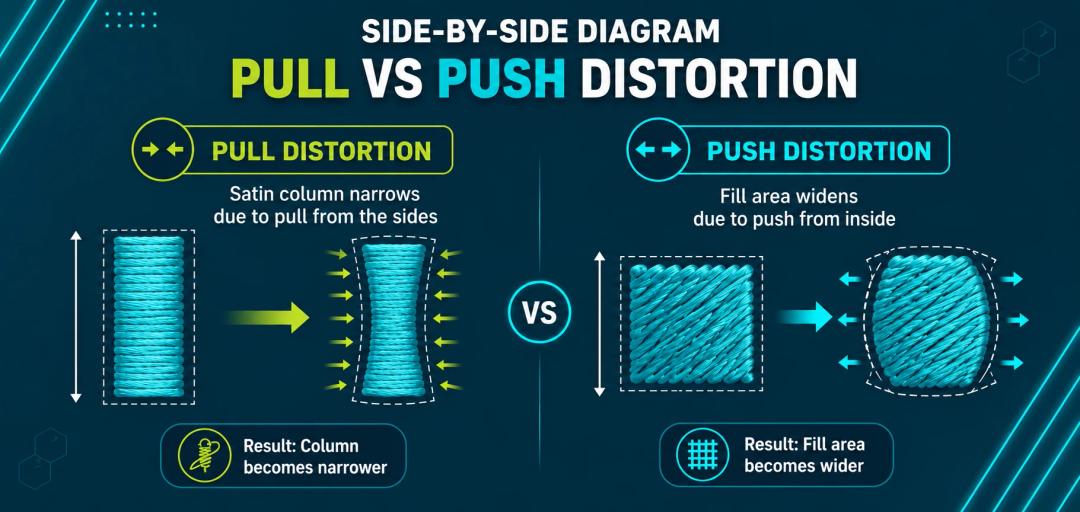
Push and pull compensation means widening satin columns and tightening fill areas before stitching so the finished embroidery matches your digital design. Pull compensation typically adds 0.15mm-0.3mm to narrow satin columns, while push compensation trims roughly 0.3mm-0.5mm from wide fill edges — the exact amount depends on stitch type, density, and fabric stretch.
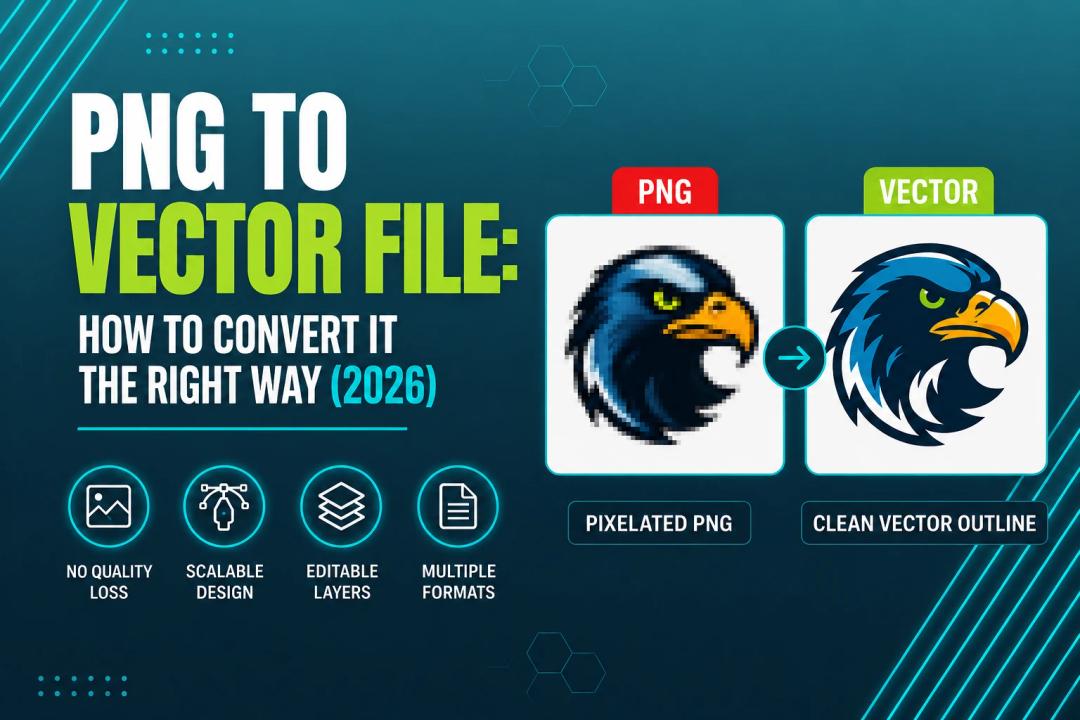
A PNG is not a vector file — it's a raster image made of fixed pixels, so it can't be scaled up without losing quality. To get a true vector file, you need to trace or "vectorize" the PNG using software like Adobe Illustrator or the free tool Inkscape, which converts the pixel image into scalable mathematical paths.
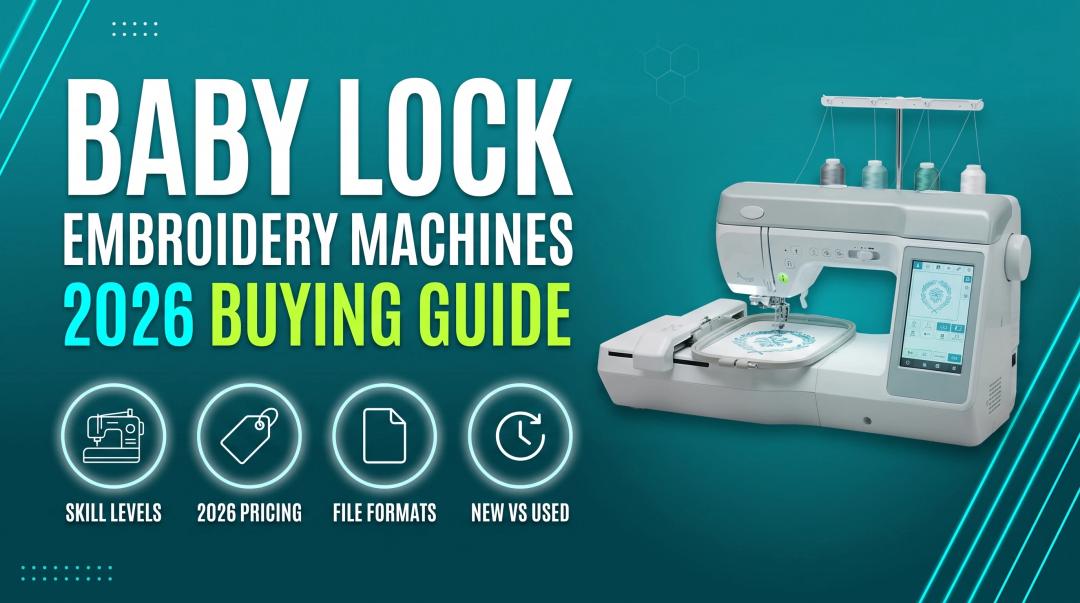
The best Baby Lock embroidery machines for 2026 are the Aurora or Bloom for beginners, the Flare or Vesta for mid-level hobbyists, and the Meridian 2, Altair 2, Array, or Radiance for advanced and commercial use. Prices run from about $1,319 for the entry-level Aurora to $14,574 for the 6-needle Array, and several newer models (Luna, Ursa, Reflection, Radiance, Venture 2) have replaced machines that older buying guides still list.
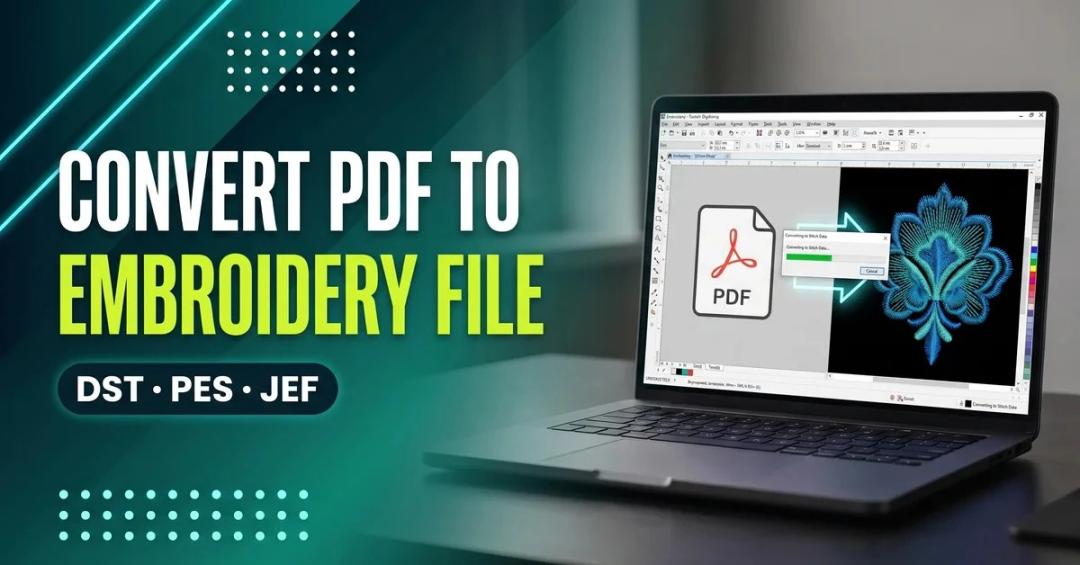
To convert a PDF to an embroidery file, open it in digitizing software such as Wilcom Hatch, Brother PE-Design, or the free Inkscape + Ink/Stitch combo, then digitize the shapes into stitch paths (fill, satin, or running stitch) before exporting to DST, PES, or JEF. A PDF alone has no stitch data — the digitizing step is what actually makes it embroidery-ready.

